Understanding dental crowns and tooth bridges helps patients make informed decisions when dealing with damaged teeth, missing teeth, or changes in their bite. Crowns and bridges are commonly recommended when a tooth loses structural strength, becomes heavily filled, or needs restoration for functional or aesthetic reasons. While removable dentures can be taken out and cleaned, crowns and bridges are fixed prosthetic devices, meaning only a dentist can remove them. Their permanence and durability make them a trusted option for restoring everyday comfort and appearance.
Many people exploring dental restorations often hear about dental crowns and tooth bridges because these treatments are reliable options for strengthening damaged teeth and filling gaps left by missing ones. Using them in the right situations helps maintain proper function and long-term oral stability.
What Are Crowns and Why Are They Used?
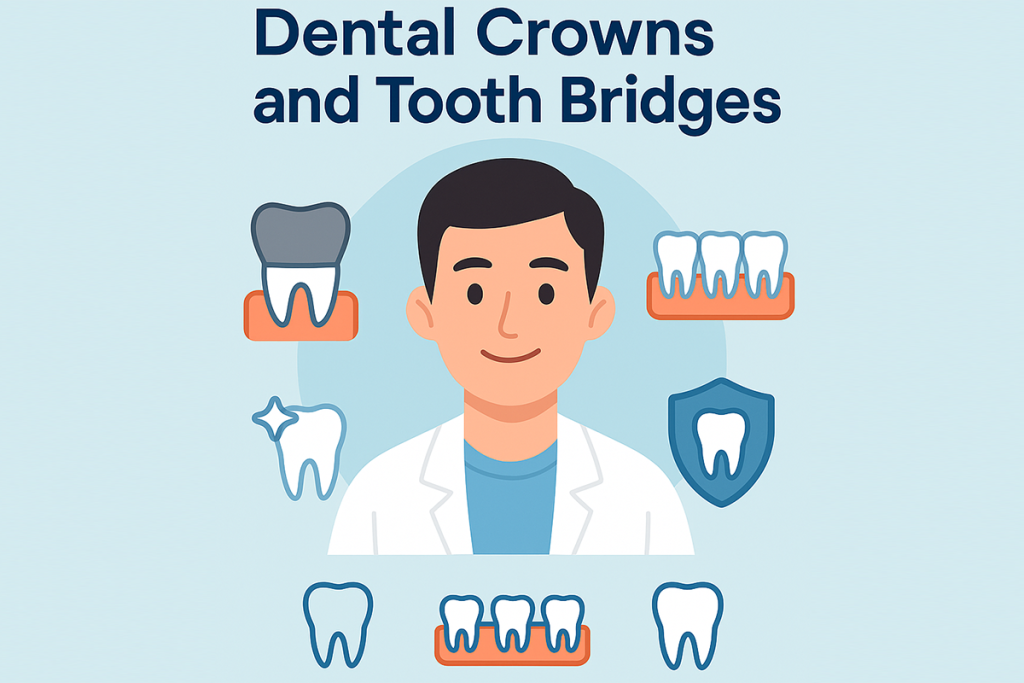
A crown acts as a protective cap placed over a damaged, discolored, or structurally compromised tooth. It improves the strength of the tooth while enhancing its appearance and alignment. Crowns may also be placed on dental implants, helping create a natural-looking tooth shape for daily chewing and speaking. Many patients prefer porcelain crowns because they closely match the shade of natural teeth, although gold and metal alloy options exist for those who need added durability, particularly for back teeth. Some crowns combine a metal base with porcelain on the outside to offer a balance of aesthetics and strength.
When Dentists Recommend a Crown
After treatments like root canal therapy, a tooth may become more fragile, making a crown important to extend the life of the tooth. Additionally, crowns are frequently used in the final step of dental implant procedures. Dentists may recommend crowns for several situations, including:
Common Reasons for Crown Placement
- Restoring a large or worn filling
- Protecting a cracked or fractured tooth
- Covering a dental implant
- Improving the appearance of a stained or poorly shaped tooth
- Supporting a tooth following root canal treatment
These uses show how dental crowns and tooth bridges contribute to both function and appearance, helping maintain long-term oral health.
How Do Tooth Bridges Work?
A bridge is often recommended when one or more teeth are missing. Empty spaces in the mouth can cause neighboring teeth to shift, affecting bite alignment. This gradual movement may lead to difficulties in chewing and, in some cases, increased risk of gum issues due to imbalance. A bridge fills the gap by securing an artificial tooth or teeth between natural teeth. These supporting natural teeth are called abutments, and they anchor the bridge securely in place. Just like crowns, bridges can be made of porcelain, ceramic, or other materials selected based on location, appearance goals, and functional needs.
Benefits of Bridges for Everyday Function
By replacing missing teeth, bridges help maintain proper bite relationships and support clear speech. They also help prevent facial structure changes that sometimes occur when teeth shift or bone areas lack support. Choosing the right material depends on durability requirements and aesthetic preferences. Dentists evaluate the placement area carefully to recommend the most suitable option.
How Long Do Crowns and Bridges Last?
Crowns and bridges are designed for long-term use, but like natural teeth, they require consistent oral care. Proper brushing, flossing, and regular dental checkups help maintain their stability. If the supporting teeth beneath a bridge develop cavities or gum issues, the bridge may loosen over time. Maintaining healthy gums and teeth increases the lifespan of these restorations. With good care, patients can enjoy comfortable and reliable use for many years.
A Supportive Approach to Restorative Dentistry
Patients often feel more confident exploring options like dental crowns and tooth bridges when treatment details are clearly explained. Whether restoring damaged teeth or replacing missing ones, these solutions contribute to a healthier and more balanced bite. Many people also appreciate the way these restorations blend with natural teeth, creating a seamless appearance that supports comfort and daily confidence.
As individuals plan for restorative care, they rely on experienced dental teams who can guide them through the process. Practices such as Lakewood Dental Smile often help patients understand how crowns and bridges fit into broader dental goals, making it easier to choose solutions aligned with long-term oral health.