Baby teeth care begins much earlier than many parents expect, often before the first tooth becomes visible. Babies are born with a complete set of 20 baby teeth hidden beneath their gums, with ten in the upper jaw and ten in the lower jaw. As these teeth gradually emerge, early oral care helps protect them from damage and decay.
The timing of the first tooth varies widely among children. Most babies begin teething between six and ten months, though some may develop teeth as early as three months or as late as twelve months. By the age of three, most children have a full set of baby teeth, making early dental care an important foundation for long-term oral health.
Understanding Baby Teeth Development
Baby teeth play an essential role in chewing, speech development, and guiding permanent teeth into proper position. Although these teeth eventually fall out, neglecting them can lead to pain, infection, and difficulty eating. Establishing consistent baby teeth care helps support comfort and healthy development during early childhood.
Dental Care Before the First Tooth
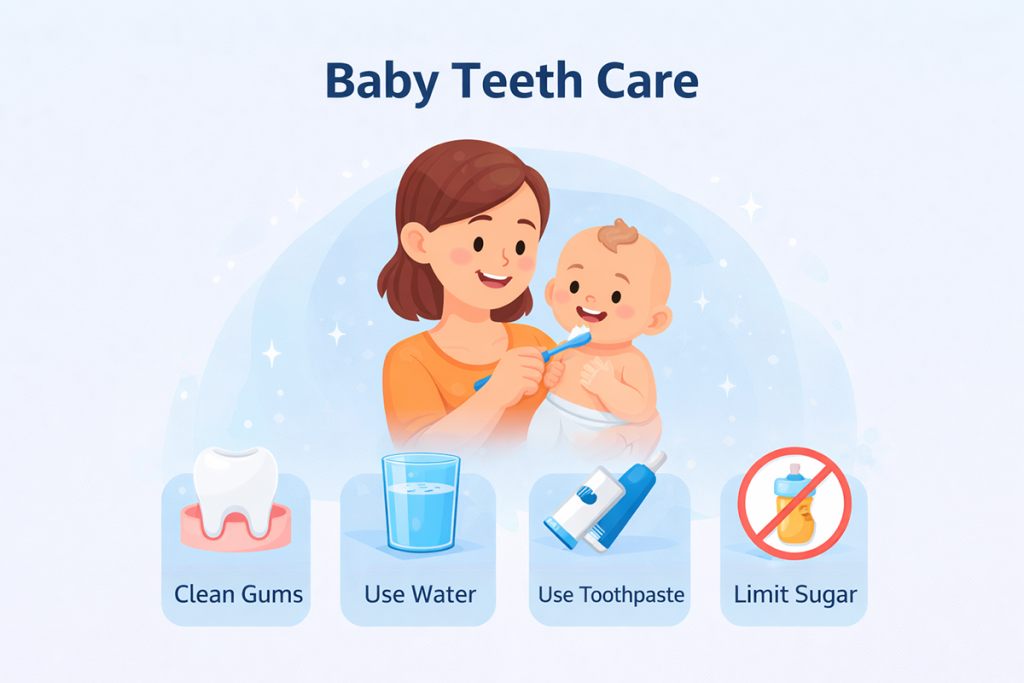
Oral care starts even before the first tooth appears. Parents can gently clean a baby’s gums and tongue using a clean, damp face washer or soft cloth. This removes milk residue and bacteria while helping the baby become familiar with oral cleaning routines.
Once the first tooth erupts, usually between six and ten months, brushing should begin. Use a soft infant toothbrush, gauze, or cloth with water only. Cleaning at least twice daily, especially after the first and last feeds, reinforces proper baby teeth care and reduces the risk of early decay.
Preventing Early Tooth Decay
Baby teeth are vulnerable to decay as soon as they appear. For infants aged zero to six months, breast milk or formula is sufficient. When additional fluids are introduced, water is the safest option. Sugary drinks significantly increase the risk of cavities and should be avoided.
Allowing a baby to fall asleep with a bottle increases the chance of tooth decay. Milk contains natural sugars, and reduced saliva flow during sleep allows sugar to remain on the teeth longer. Bottle feeding during sleep also increases choking risk, making it an unsafe habit.
Using Toothpaste Safely
For babies and toddlers up to three years old, only a tiny smear of toothpaste is needed. Children aged three to six years should use a pea-sized amount. Parents should brush gently in small circular motions, covering all tooth surfaces.
Encouraging children to spit out toothpaste instead of rinsing helps fluoride remain on the teeth longer. Brushing should occur at least twice daily, particularly before bedtime. These steps strengthen daily baby teeth care habits.
Managing Sugar Exposure
Sugar contributes to tooth decay not only through quantity but also through how often and how long teeth are exposed. Lollipops, sweet snacks, and sugary drinks are especially harmful because they keep sugar in contact with teeth for extended periods. Acidic drinks such as fruit juice can also weaken enamel.
Limiting sugary foods, offering water between meals, and maintaining a consistent brushing routine all help reduce decay risk during early childhood.
Building Lifelong Oral Health Habits
Healthy oral routines formed during infancy often continue into later childhood and adulthood. Regular cleaning, thoughtful feeding choices, and awareness of decay risks support lasting oral health. Learning effective baby teeth care practices empowers parents to protect their child’s smile from an early age.
Education around early dental hygiene is an important part of preventive care and is often discussed during routine pediatric dental visits, including informational conversations that may take place at Lakewood Dental Smile as part of broader oral health awareness.