Types of dental crowns are used to restore teeth that have been weakened, damaged, or structurally compromised. When routine treatments such as cleanings, fillings, or bonding are not enough to protect a tooth, a crown may be recommended. Crowns are commonly placed after procedures like root canal treatment or significant tooth restoration to preserve strength and function.
A dental crown acts as a protective cap that fully covers a tooth. Once cemented into place, it restores the tooth’s shape, improves alignment, and helps protect it from further damage. Crowns also enhance appearance, especially when a tooth has visible cracks, discoloration, or extensive wear.
What Is a Dental Crown?
A dental crown is a fixed prosthetic restoration that permanently covers an existing tooth. Unlike removable dental appliances, crowns remain securely attached and can only be removed by a dentist. The primary function of a crown is to strengthen a weakened tooth, but it also restores chewing ability and improves overall aesthetics.
Before placing a crown, the dentist reshapes the tooth by reducing its size to ensure a precise fit. An impression of the prepared tooth is then taken and sent to a dental laboratory where the crown is custom fabricated. In most cases, a temporary crown is placed to protect the tooth while the permanent crown is being created.
Understanding the types of dental crowns available helps patients make informed decisions based on durability, appearance, and oral health needs.
The Main Types of Dental Crowns
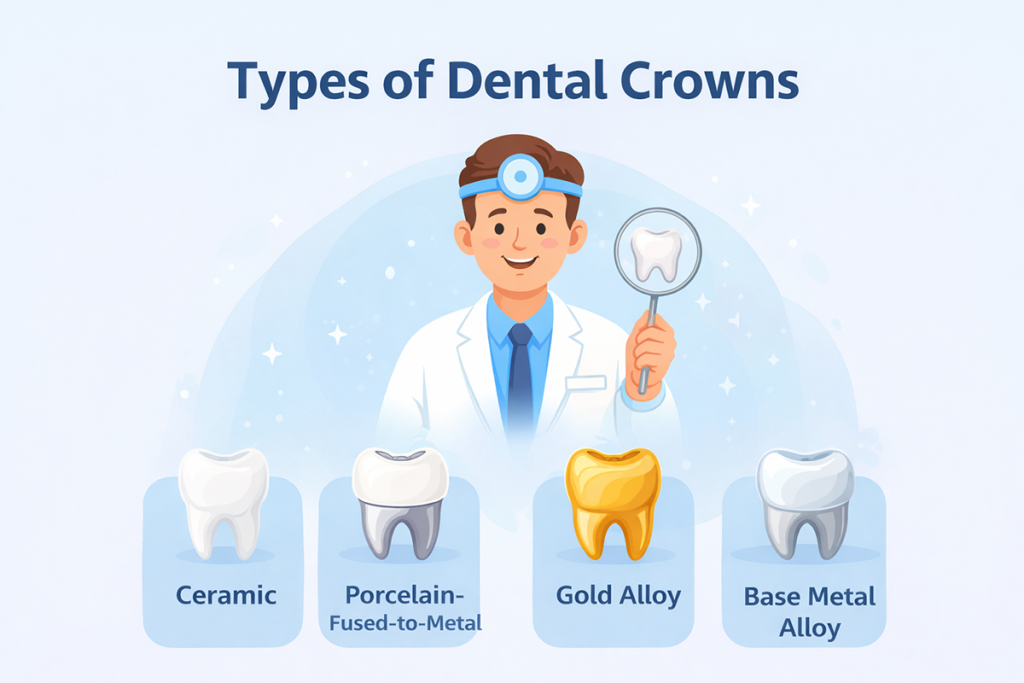
There are four commonly used crown materials, each with unique characteristics.
1. Ceramic Crowns
Ceramic crowns are often chosen for restoring front teeth due to their ability to closely match natural tooth color. These crowns are made from porcelain-based materials and provide excellent aesthetics. They blend seamlessly with surrounding teeth, making them ideal for visible areas of the mouth.
2. Porcelain-Fused-to-Metal Crowns
This type combines a porcelain exterior with a metal inner structure. The metal core adds strength, while the porcelain coating maintains a natural appearance. Porcelain-fused-to-metal crowns offer better durability than all-ceramic crowns and are commonly used for both front and back teeth.
3. Gold Alloy Crowns
Gold alloy crowns are made from a mixture of gold, copper, and other metals. They are known for their exceptional durability and resistance to fracture. These crowns do not wear down opposing teeth and require minimal removal of healthy tooth structure. Although highly functional, they are typically placed on back teeth due to their metallic appearance.
4. Base Metal Alloy Crowns
Base metal alloy crowns are composed of non-noble metals that are extremely strong and resistant to corrosion. These crowns require the least amount of natural tooth reduction before placement. Their strength makes them suitable for patients who need long-lasting restorations under heavy biting pressure.
Differences Between Crown Materials
The performance of dental crowns varies depending on material. Ceramic crowns provide excellent aesthetics but may be less durable under heavy pressure. Porcelain-fused-to-metal crowns balance appearance and strength, making them a versatile option.
Gold and base metal alloy crowns offer the highest durability and are gentle on opposing teeth. Porcelain-based crowns resist wear but may cause irritation if their surfaces become rough over time. The sealing ability of a crown also depends on the quality of the underlying tooth and the cement used during placement.
Longevity and Care of Dental Crowns
With proper care, crowns can last many years and sometimes a lifetime. Daily brushing and flossing help prevent decay around the crown margins. Maintaining good oral hygiene reduces the risk of crowns loosening or failing over time.
Regular dental checkups are essential for monitoring crown condition and overall oral health. Awareness of the types of dental crowns available allows patients to choose restorations that align with both functional needs and long-term dental health goals. This educational approach supports informed care decisions, including those discussed during routine visits at Lakewood Dental Smile.