Common reasons for tooth decay often begin quietly, long before pain or visible holes appear in the teeth. Tooth decay develops when bacteria in the mouth produce acids that gradually weaken and break down the enamel. If this process continues without intervention, the damage can move deeper into the tooth and reach sensitive inner structures.
Tooth decay, commonly referred to as cavities, progresses in stages. The earliest stage affects enamel and is usually painless, which is why many people do not notice a problem at first. Over time, continued acid exposure allows decay to advance into dentin and eventually the pulp, where nerves and blood vessels are located. This progression explains why untreated decay can result in infection, severe discomfort, and even tooth loss.
How the Decay Process Starts
Bacteria naturally exist in the mouth and feed on leftover food particles, especially sugars and refined carbohydrates. When these bacteria digest sugar, they release acid as a byproduct. Repeated acid attacks weaken enamel and create microscopic openings, allowing bacteria to penetrate deeper layers of the tooth. These mechanisms are among the most common reasons for tooth decay seen across all age groups.
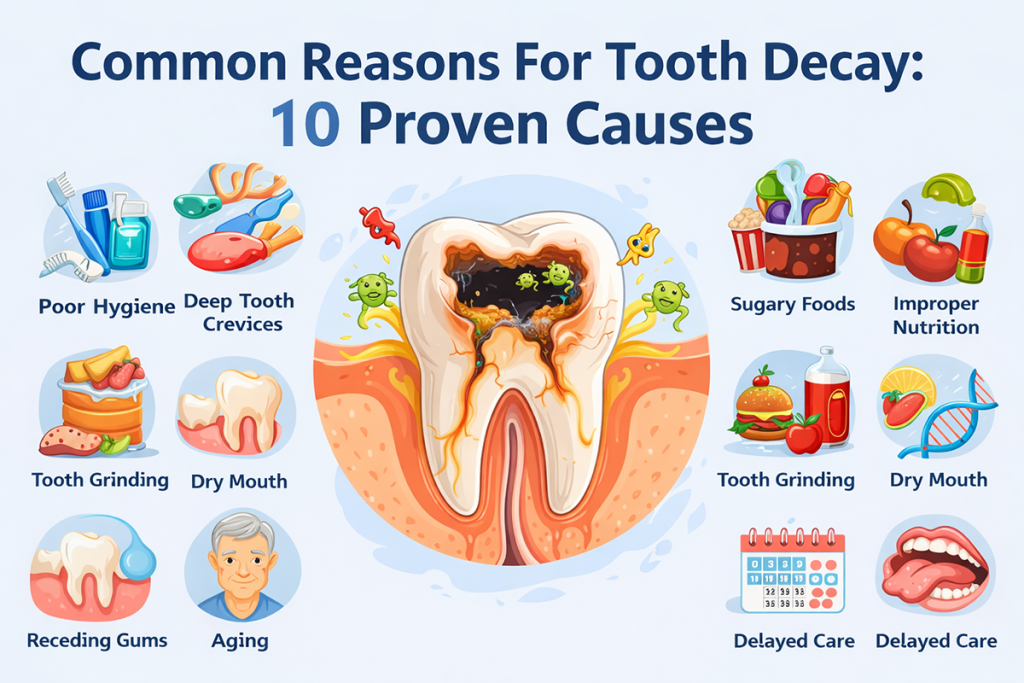
Below are ten proven factors that contribute to the development and progression of cavities.
1. Poor Oral Hygiene Practices
Inadequate brushing and flossing allow plaque to remain on tooth surfaces. Plaque contains harmful bacteria that continuously produce acid, increasing the risk of enamel erosion. Poor oral hygiene may include brushing less than twice daily, skipping flossing, or neglecting tongue cleaning. Brushing for a full two minutes helps remove plaque before it hardens into tartar.
2. Deep Tooth Crevices and Enamel Weakness
Some teeth naturally have deep grooves or thinner enamel, making them more vulnerable to bacterial buildup. These crevices trap food particles that are difficult to remove with regular brushing. Over time, this environment promotes decay, which is why sealants are often recommended for uninfected teeth with deep grooves.
3. Improper Nutrition
Diet plays a major role among the common reasons for tooth decay. Frequent consumption of sugary, starchy, or acidic foods weakens enamel and supports bacterial growth. A balanced diet that includes vitamins and minerals helps maintain enamel strength, while excessive acidic beverages accelerate erosion.
4. Frequent Intake of Sugary Foods
Sugar is a primary fuel source for oral bacteria. When sugary foods or drinks are consumed, acid production begins almost immediately. Multiple acid attacks can occur during a single meal, especially with frequent snacking. This repeated exposure increases the likelihood of cavities forming.
5. Tooth Grinding (Bruxism)
Many people grind their teeth without realizing it, often during sleep or periods of stress. Grinding wears down the protective enamel layer, exposing teeth to bacterial damage. Over time, enamel loss caused by grinding becomes one of the common reasons for tooth decay. Protective night guards are often used to limit damage.
6. Dry Mouth
Saliva plays an important role in neutralizing acids and washing away food debris. Reduced saliva flow, caused by medications, dehydration, or certain health conditions, leaves teeth exposed to prolonged acid attacks. Without sufficient saliva, decay can progress more rapidly.
7. Aging
As people age, enamel naturally thins and gums may recede, exposing tooth roots. Certain medications commonly used later in life also contribute to dry mouth. These combined factors explain why aging remains one of the common reasons for tooth decay in adults.
8. Gum Recession
When gums pull away from the teeth, the roots become exposed. Tooth roots lack the protective enamel found on the crown, making them more susceptible to decay. Plaque accumulation along the gumline further increases cavity risk in these areas.
9. Genetic Factors
Genetics influence enamel strength, saliva composition, and tooth shape. Some individuals inherit traits that make them more prone to cavities despite consistent oral care. These inherited factors can increase vulnerability to decay over time.
10. Delayed Dental Attention
Ignoring early signs of cavities allows decay to progress unchecked. Minor enamel damage can develop into deep infections that affect the pulp. Regular dental examinations help detect problems early and prevent advanced decay.
Recognizing the common reasons for tooth decay helps individuals make informed decisions about daily oral care habits. Consistent hygiene practices, mindful dietary choices, and early attention to symptoms can significantly reduce cavity risk. Education around these factors plays an important role in long-term oral health awareness, including patient guidance provided through Lakewood Dental Smile.