Daily habits that damage teeth often go unnoticed because they seem harmless at first. Many people brush regularly and still experience cavities, sensitivity, or gum issues without realizing that everyday behaviors outside brushing are quietly affecting their oral health. Over time, these habits weaken enamel, irritate gums, and increase the risk of dental problems.
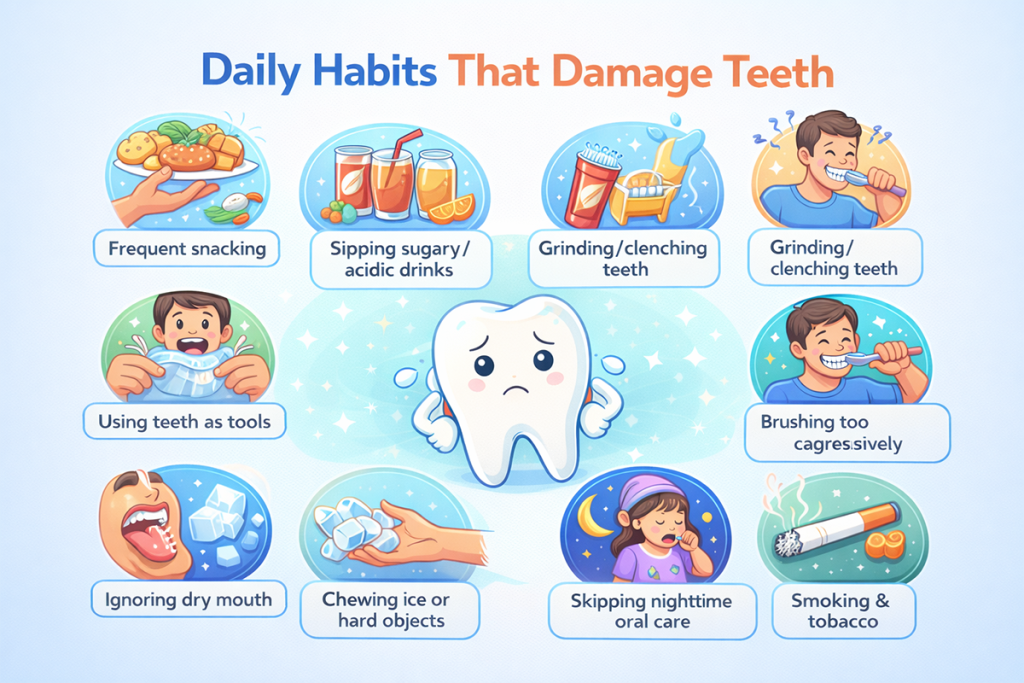
Recognizing these habits early allows people to protect their teeth without complex treatments or drastic lifestyle changes.
Frequent snacking throughout the day
Snacking constantly, especially on sugary or starchy foods, exposes teeth to repeated acid attacks. Each time you eat, bacteria produce acids that weaken enamel. When snacking happens all day, teeth never get enough time to recover.
Limiting snacks and sticking to proper meal times helps reduce acid exposure and protects enamel.
Sipping sugary or acidic drinks slowly
Drinks like soda, sweetened tea, energy drinks, and even fruit juices can damage teeth when consumed slowly over long periods. Sipping keeps acids in contact with teeth for extended durations, increasing enamel erosion.
Drinking these beverages quickly and rinsing with water afterward helps reduce harm.
Grinding or clenching teeth
Teeth grinding, often caused by stress or sleep habits, is one of the most damaging daily habits that damage teeth. Grinding wears down enamel, causes cracks, and may lead to jaw pain or headaches.
Many people grind their teeth without realizing it. Identifying the habit early helps prevent long-term damage.
Using teeth as tools
Opening bottles, tearing packets, or biting nails puts unnecessary pressure on teeth. Teeth are designed for chewing food, not handling hard objects. These habits can cause chips, fractures, or weakened enamel over time.
Avoiding this behavior protects tooth structure and prevents sudden dental emergencies.
Brushing too aggressively
While brushing is essential, brushing too hard or using a hard-bristled toothbrush can damage enamel and cause gum recession. Aggressive brushing exposes sensitive areas and increases discomfort.
Using a soft-bristled toothbrush with gentle pressure is more effective and safer.
Ignoring dry mouth
Dry mouth reduces saliva, which plays a crucial role in neutralizing acids and washing away bacteria. Habits such as mouth breathing, smoking, dehydration, or certain medications contribute to dryness.
Drinking enough water and addressing dry mouth early helps maintain a healthy oral environment.
Skipping nighttime oral care
Not brushing before bed allows food particles and bacteria to remain on teeth overnight. Saliva flow decreases during sleep, making teeth more vulnerable to decay and gum inflammation.
Nighttime brushing is one of the most important habits for preventing damage.
Chewing ice or hard objects
Chewing ice may seem harmless, but it places excessive stress on teeth. This can cause micro-cracks or even fractures, especially in teeth with fillings or existing weaknesses.
Avoiding hard chewing habits helps preserve tooth strength.
Smoking and tobacco use
Tobacco products stain teeth, reduce blood flow to gums, and increase the risk of gum disease and oral infections. Smoking also slows healing, making dental problems harder to treat.
Reducing or quitting tobacco use significantly improves oral and overall health.
Why awareness matters
Understanding daily habits that damage teeth allows people to make small adjustments that lead to long-term benefits. Teeth are affected by more than brushing alone—daily choices play a powerful role in oral health.
Dental professionals often emphasize habit awareness during routine checkups. Clinics such as Lakewood Dental Smile remind patients that preventing damage is easier than treating it later.
Many dental problems develop quietly over time. Identifying daily habits that damage teeth helps prevent cavities, sensitivity, and gum disease before they become serious. With simple changes and mindful routines, people can protect their teeth and maintain a healthier smile for years.