
Many people feel uneasy when a dentist recommends X rays, often because of concerns about radiation exposure. This fear is understandable, but it is usually based on outdated information. Understanding dental x rays safety helps patients feel more confident and informed about why these images are taken and how they support long-term oral health.
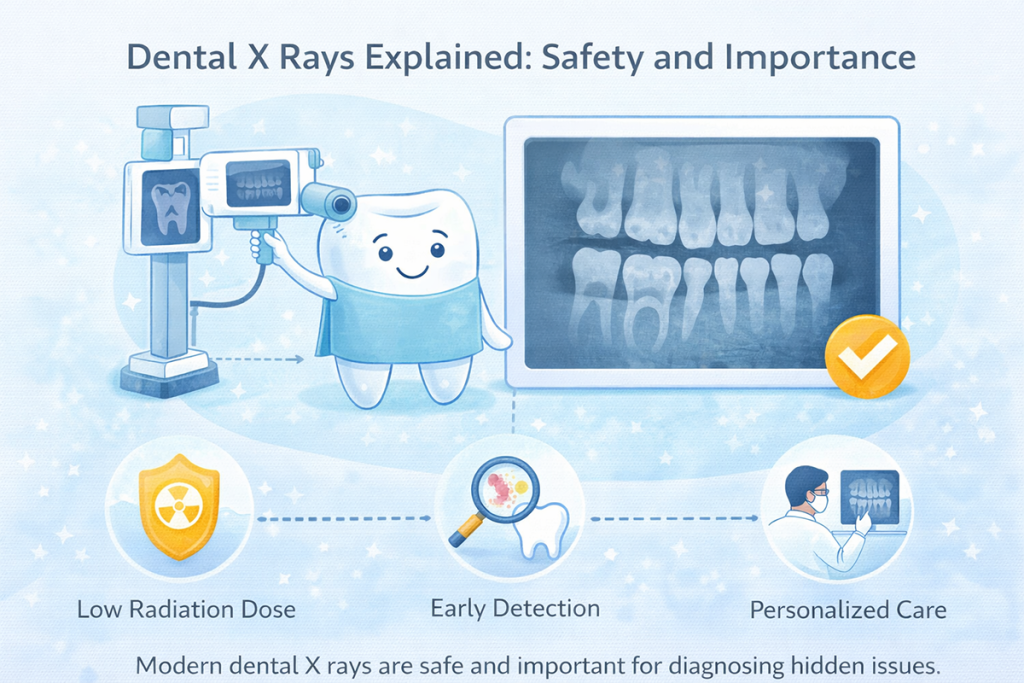
Dental X rays use a very small amount of radiation to capture images of teeth, bones, and surrounding structures that cannot be seen during a regular examination. Problems such as cavities between teeth, infections below the gumline, bone loss, or issues with developing teeth often remain hidden without imaging. This is why dental X rays play a crucial role in early detection and prevention.
Many concerns around dental imaging come from misunderstanding how radiation exposure actually works in everyday life. People are exposed to natural background radiation daily from sunlight, air travel, and even household electronics. The amount of radiation used in modern dental imaging is extremely small when compared to these routine exposures.
In fact, a single dental X ray delivers only a fraction of the radiation a person receives from natural sources over a normal day. This perspective is important when discussing dental x rays safety, because it shows that the risk is minimal when imaging is used appropriately. Modern equipment, strict safety guidelines, and limited exposure areas all work together to ensure that dental imaging remains a safe and responsible diagnostic tool rather than a health concern.
Modern dental technology has significantly reduced radiation exposure compared to older systems. Digital X rays, which are now commonly used, require much lower radiation levels than traditional film X rays. Protective measures such as lead aprons and thyroid collars further reduce exposure. When discussing dental x rays safety, it is important to note that the radiation dose from dental imaging is extremely low and carefully controlled.
Another common concern is how often dental X rays are needed. There is no fixed schedule that applies to everyone. The frequency depends on factors such as age, oral health history, risk of cavities, gum condition, and existing dental work. For someone with good oral health and low risk, X rays may be taken less frequently. For others with ongoing issues, more regular imaging may be necessary. This personalized approach is an important part of dental x rays safety.
Children and adults may require X rays for different reasons. In children, X rays help monitor tooth development, detect missing or extra teeth, and identify problems early. In adults, they are often used to check for decay, infections, bone changes, and issues related to previous treatments. Despite differences in purpose, the same safety standards apply to all age groups.
Pregnancy is another situation where patients often worry about dental X rays safety. Dentists typically avoid X rays during pregnancy unless absolutely necessary. When imaging is required, strict protective measures are taken to ensure safety. Informing the dental team about pregnancy allows appropriate decisions to be made while prioritizing both oral and overall health.
Skipping recommended X rays can sometimes lead to delayed diagnosis. Problems that go unnoticed can progress silently and become more complex to treat later. Early detection through imaging often means simpler, less invasive treatments. This is why understanding dental x rays safety also involves recognizing the risks of avoiding necessary diagnostic tools.
It is also important to understand that dental X rays are targeted. They focus only on the area being examined, minimizing unnecessary exposure. Combined with modern equipment and professional guidelines, this targeted approach further supports dental x rays safety and effectiveness.
Patients should always feel comfortable asking questions about why an X ray is recommended and how it benefits their care. Clear communication helps reduce anxiety and builds trust. Knowing that dental X rays are used thoughtfully and sparingly can reassure patients who feel hesitant.
Toward the end of the diagnostic process, professional judgment plays a key role in deciding when imaging is needed. At Lakewood Dental Smile, dental X rays are recommended based on individual needs, with a strong emphasis on safety, early detection, and long-term oral health protection.