Many people feel anxious when a dentist recommends dental scaling, often assuming it means something serious or painful. Some believe scaling weakens teeth, while others avoid it because their gums do not hurt. These assumptions cause people to delay treatment, which allows hidden gum problems to progress. Understanding dental scaling explained clearly helps remove fear and shows why this procedure is often preventive rather than corrective.
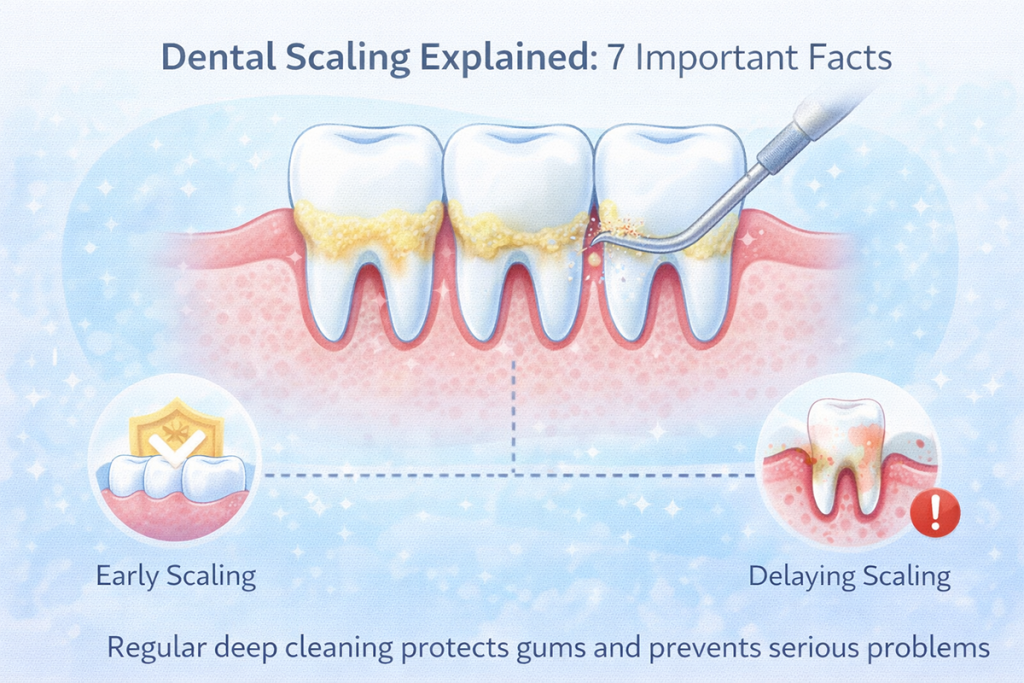
Dental scaling is a deep cleaning procedure used to remove plaque and hardened tartar from teeth and from below the gumline. Regular brushing and flossing can remove plaque, but once it hardens into tartar, it cannot be cleaned at home. Tartar creates a rough surface where bacteria attach easily and multiply. This bacterial buildup irritates the gums and leads to inflammation, making dental scaling necessary when routine cleaning is no longer enough.
Many concerns around dental procedures come from misunderstanding how gum disease develops. Gum problems usually begin quietly, without pain or visible damage. Bacteria accumulate slowly along the gumline and trigger inflammation, but the early changes are subtle. Because discomfort is minimal, people ignore bleeding or swelling. This is why dental scaling explained early is important, as it stops bacteria before they reach deeper tissues and cause permanent damage.
Another factor that confuses patients is the belief that bleeding gums are normal. Healthy gums do not bleed during brushing or flossing. Bleeding is a sign of inflammation caused by bacterial toxins. When dental scaling is delayed, these bacteria move deeper under the gums and begin damaging the bone that supports the teeth. Early deep cleaning interrupts this process and prevents progression to advanced gum disease.
A common myth is that dental scaling removes enamel or weakens teeth. In reality, scaling removes only plaque and tartar deposits that are already harmful. Teeth may feel slightly different after the procedure because swollen gums begin to heal and tighten around the teeth. Any spaces noticed afterward were already present but hidden by inflammation. Dental scaling explained properly helps patients understand that these changes indicate healing, not damage.
If dental scaling is postponed, gum disease can advance silently. As bacteria remain below the gumline, they gradually destroy the bone that anchors teeth in place. This stage often develops without pain, which is why many people are unaware of the severity until teeth become loose. Delaying scaling increases the risk of gum recession, chronic infection, and eventual tooth loss. This progression highlights why early intervention matters.
Some people worry about pain during dental scaling. Modern dental instruments and techniques have significantly improved comfort. In cases of sensitivity or advanced gum inflammation, dentists may use numbing agents to reduce discomfort. Mild soreness after the procedure is normal and usually temporary. Knowing dental scaling explained realistically helps patients approach treatment with confidence rather than fear.
Dental scaling is not always a one-time solution. Depending on gum health, follow-up visits and improved oral hygiene habits may be necessary to maintain results. Brushing gently with proper technique, flossing daily, and attending routine checkups help prevent tartar from building up again. When patients understand dental scaling explained as part of ongoing care, long-term gum health improves significantly.
Gum health also affects overall health. Research has linked ongoing gum inflammation to conditions such as heart disease and complications in diabetes. Bacteria from the mouth can enter the bloodstream and contribute to systemic inflammation. By reducing bacterial load, dental scaling supports both oral and general health. This broader impact makes scaling an important preventive measure, not just a cosmetic cleaning.
Ignoring professional advice for scaling often leads to more complex treatments later. What could have been managed with a deep cleaning may progress into surgical procedures if gum disease advances. Early dental scaling helps avoid these outcomes and preserves natural teeth for as long as possible.
Toward the end of preventive care planning, professional evaluation plays an important role in deciding when scaling is needed. At Lakewood Dental Smile, dental scaling is approached as an early preventive step focused on protecting gum health and preserving natural teeth before advanced damage occurs.