
Losing a tooth affects more than just appearance. It can change the way you chew, speak, and even how your jawbone maintains its strength over time. Many people consider implants but hesitate because they are unsure what the dental implant procedure actually involves. Some expect severe pain, while others assume it is completed in a single visit. In reality, the dental implant procedure is a carefully planned medical process designed to restore function in a safe and long-lasting way. Understanding each stage helps patients approach treatment with realistic expectations and confidence.
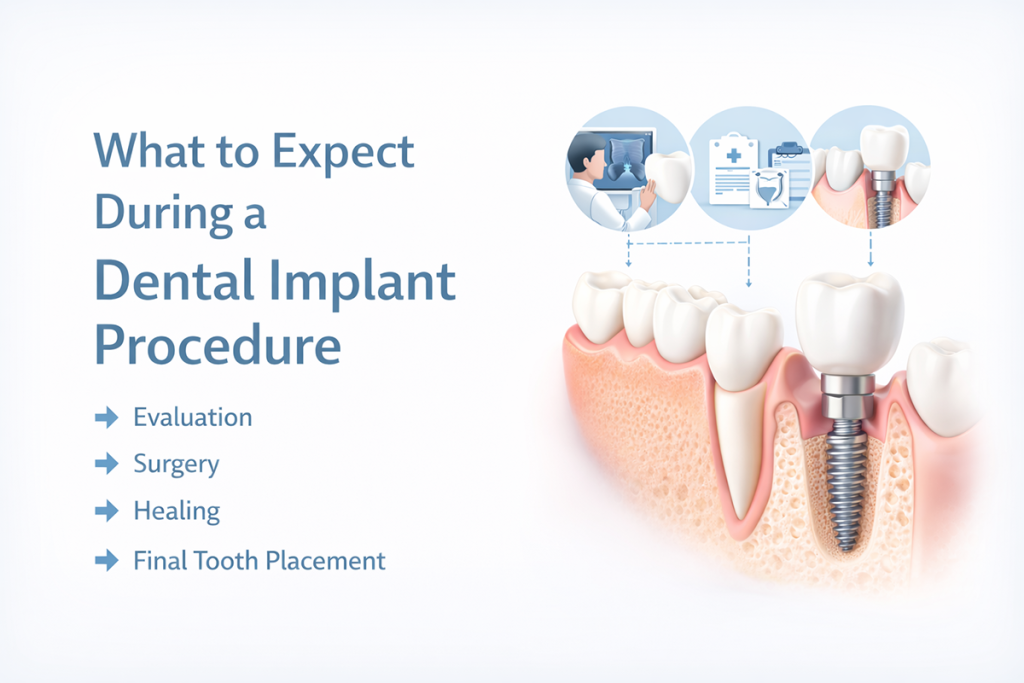
Unlike traditional tooth replacement methods, the dental implant procedure focuses on replacing both the visible tooth and its root. A small implant is placed into the jawbone, where it becomes a stable foundation for a replacement tooth. This approach helps prevent bone loss and avoids placing pressure on nearby teeth. Because every patient’s oral condition is different, the procedure follows a structured sequence to ensure accuracy, safety, and predictable outcomes.
Below are the 7 important steps involved in the dental implant procedure, explained in a clear and patient-focused manner.
1. Initial examination and diagnosis
The dental implant procedure begins with a comprehensive oral examination. The dentist evaluates missing teeth, gum health, bite alignment, and the condition of surrounding teeth. X-rays or advanced scans are used to assess bone density and identify vital structures such as nerves and sinuses. This information determines whether the jawbone can support an implant safely.
This step is essential because implant success depends heavily on proper assessment. If bone quality is insufficient or gum disease is present, proceeding without treatment can cause complications later. Reviewing medical history is also important, as certain health conditions can affect healing. A detailed diagnosis ensures the dental implant procedure starts on a solid and safe foundation.
2. Customized treatment planning
After confirming suitability, the dental implant procedure moves into careful treatment planning. The dentist decides the exact position, size, and number of implants required. Proper planning ensures the implant will align naturally with existing teeth and distribute chewing forces evenly.
Some patients may need preparatory treatments such as tooth extraction, gum therapy, or bone grafting. Although this can extend the overall timeline, it significantly improves long-term success. This stage ensures that each step of the dental implant procedure is tailored to the patient’s individual needs rather than using a one-size-fits-all approach.
3. Surgical placement of the implant
Surgical placement is a key stage of the dental implant procedure. A titanium implant is inserted into the jawbone under local anesthesia. Most patients report only mild discomfort during this step. Precision is crucial, as the implant must be positioned correctly to avoid nerves and provide stable support for the replacement tooth.
After placement, the gum is closed or shaped around the implant to protect it during healing. The accuracy of this stage directly influences how well the implant integrates with the bone and how long it will last.
4. Healing and bone integration
Healing is one of the most important phases of the dental implant procedure. Over several weeks or months, the jawbone gradually bonds with the implant through a natural process called osseointegration. This bond allows the implant to function like a natural tooth root.
During this period, patients are advised to maintain good oral hygiene and avoid placing excessive pressure on the implant area. Temporary teeth may be provided if appearance or function is a concern. Allowing adequate healing time is essential, as rushing this phase can compromise the stability of the implant.
5. Abutment placement
Once healing is complete, the next step in the dental implant procedure is attaching the abutment. The abutment is a small connector that links the implant to the final tooth. In some cases, a minor procedure is needed to expose the implant before attaching the abutment.
The abutment helps shape the gum tissue and provides a stable base for the replacement tooth. Proper placement ensures the final result looks natural and feels comfortable.
6. Crown creation and fitting
After the gums heal around the abutment, impressions are taken to create a custom crown. The crown is designed to match the color, shape, and size of natural teeth. Accurate fabrication ensures proper bite alignment and comfortable chewing.
The crown is then securely attached to the abutment, completing the visible part of the dental implant procedure. At this stage, the implant functions like a natural tooth in everyday activities.
7. Long-term care and maintenance
The final step of the dental implant procedure focuses on long-term care. While implants do not decay, the surrounding gums and bone must remain healthy. Daily brushing, flossing, and regular dental checkups help prevent infection around the implant.
With proper care, dental implants can last for many years and provide a reliable solution for missing teeth. Many patients gain clarity about this structured process during educational consultations at clinics such as Lakewood Dental Smile, where treatment decisions are guided by long-term oral health rather than short-term solutions.