A dental abscess is a clear sign that an infection has developed inside the tooth, gums, or surrounding bone. Many people ignore early discomfort, assuming it will fade on its own. However, dental abscess symptoms usually worsen over time and can lead to serious complications if left untreated. Understanding these symptoms early helps prevent unnecessary pain and long-term damage.
A dental abscess forms when bacteria enter deep dental tissues. This often happens due to untreated cavities, gum disease, cracked teeth, or dental trauma. Once bacteria reach the inner areas of the tooth or gums, the body reacts by producing pus. This buildup creates pressure, leading to pain and swelling. While painkillers may temporarily reduce discomfort, they do not stop the infection.
Dental abscess symptoms may appear mild at first and then suddenly become severe. In some cases, pain reduces briefly if the abscess drains, which can give a false sense of relief. The infection, however, remains active and continues to spread unless properly treated.
Why dental abscess symptoms should never be ignored
A dental abscess does not heal on its own. Ignoring the symptoms allows bacteria to spread to nearby teeth, the jawbone, and surrounding tissues. In advanced cases, infection can move beyond the mouth and affect overall health. Swelling may increase, pain can become intense, and routine activities such as eating or speaking may become difficult.
Early treatment often involves simpler procedures and better outcomes. When dental abscess symptoms are addressed quickly, it is easier to preserve the affected tooth and prevent complications. Delayed care usually leads to more complex treatment and longer recovery.
7 important early dental abscess symptoms
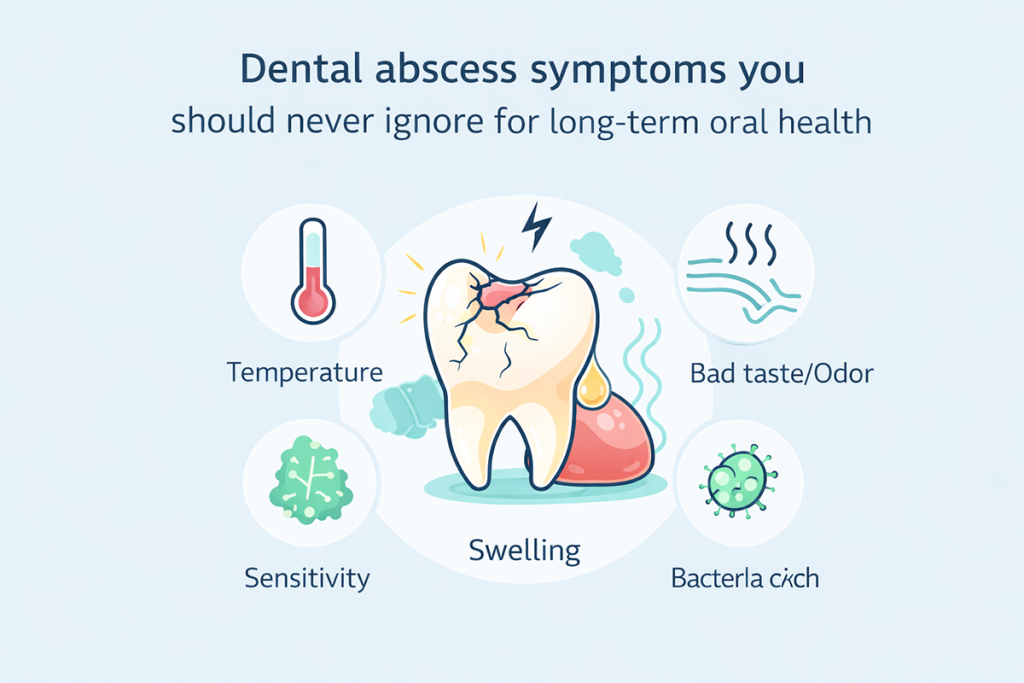
1. Constant or throbbing tooth pain
One of the most common dental abscess symptoms is deep, continuous pain. This pain may worsen at night or when chewing. Unlike short-term sensitivity, abscess pain often spreads to the jaw, ear, or neck and becomes more intense over time.
2. Swelling in the gums, face, or jaw
Swelling occurs when infection builds up under pressure. It may appear as a tender lump on the gums or visible swelling in the cheek or jaw. In severe cases, swelling can interfere with opening the mouth fully.
3. Sensitivity to hot and cold
A tooth affected by an abscess may react strongly to hot or cold foods and drinks. This sensitivity usually lingers after exposure, suggesting that the tooth nerve is involved.
4. Bad taste or unpleasant breath
When pus drains from an abscess, it can cause a persistent bad taste in the mouth. Ongoing foul breath that does not improve with oral hygiene is another common sign of infection.
5. Fever or general discomfort
As the body responds to infection, fever, fatigue, or general weakness may develop. These symptoms indicate that the infection may be spreading and requires prompt attention.
6. Red or tender gums
Gums near the infected tooth often become red, swollen, and painful to touch. Pressing the area may release fluid, which is a strong indicator of a dental abscess.
7. Pain while chewing or jaw stiffness
Difficulty chewing or stiffness in the jaw can occur when inflammation spreads to surrounding tissues. This symptom often signals that the abscess is progressing.
Common causes behind dental abscess symptoms
Dental abscess symptoms usually result from untreated oral problems. Deep cavities allow bacteria to reach the inner pulp of the tooth. Gum disease creates pockets where bacteria multiply. Cracked or broken teeth, even small fractures, provide pathways for infection. Poor oral hygiene and delayed dental care significantly increase the risk.
Once bacteria reach deeper tissues, the infection continues to grow unless treated professionally. Home remedies cannot eliminate the source of infection.
What happens if dental abscess symptoms are left untreated
Untreated dental abscess symptoms can lead to serious consequences. Infection may spread to the jawbone, sinuses, or nearby soft tissues. In rare but severe cases, bacteria can enter the bloodstream, leading to broader health risks.
Pain may temporarily decrease if pressure is released, but this does not mean healing has occurred. The infection remains active and often returns with greater severity. Delayed treatment usually results in more invasive procedures.
Why early care makes a major difference
Early treatment focuses on removing infection and preventing further spread. This may involve draining the abscess, cleaning infected areas, treating the root canal, or prescribing medication when necessary. Addressing dental abscess symptoms early often preserves natural teeth and reduces discomfort.
Clinics such as Lakewood Dental Smile frequently see cases where early evaluation could have prevented complex treatment, reinforcing the importance of timely dental attention.
When to seek professional evaluation
If pain, swelling, or other dental abscess symptoms persist for more than a short period, professional evaluation is essential. Early diagnosis leads to simpler treatment, quicker recovery, and better long-term oral health outcomes.