A cracked tooth is a dental problem that often goes unnoticed in the early stages. Unlike a completely broken tooth, cracks can be small, hidden, and difficult to detect without careful attention. Many people continue using the affected tooth normally, unaware that damage is slowly worsening beneath the surface. Recognizing cracked tooth symptoms early can help prevent pain, infection, and tooth loss.
Cracks may develop due to chewing hard foods, teeth grinding, sudden injuries, or long-term wear. Even teeth that look healthy from the outside can develop internal cracks. What makes this condition risky is that symptoms may come and go, leading people to delay professional care. Unfortunately, cracks do not repair themselves and usually worsen over time.
Cracked tooth symptoms can vary depending on the depth and location of the crack. Some cracks affect only the enamel, while others extend into deeper layers of the tooth. As damage progresses, discomfort increases and complications become more likely.
Why cracked tooth symptoms should be taken seriously
A cracked tooth creates an opening for bacteria to enter the inner parts of the tooth. Over time, this can lead to inflammation, infection, or even abscess formation. Ignoring early symptoms increases the risk of severe pain, nerve damage, and the need for complex treatment.
Early intervention often allows dentists to preserve the natural tooth. Delayed care, on the other hand, may result in root canal treatment or tooth extraction. Understanding the warning signs helps reduce long-term damage and protects overall oral health.
6 important cracked tooth symptoms to watch for
Below are six common signs that may indicate a cracked tooth. Even mild or occasional symptoms should not be ignored.
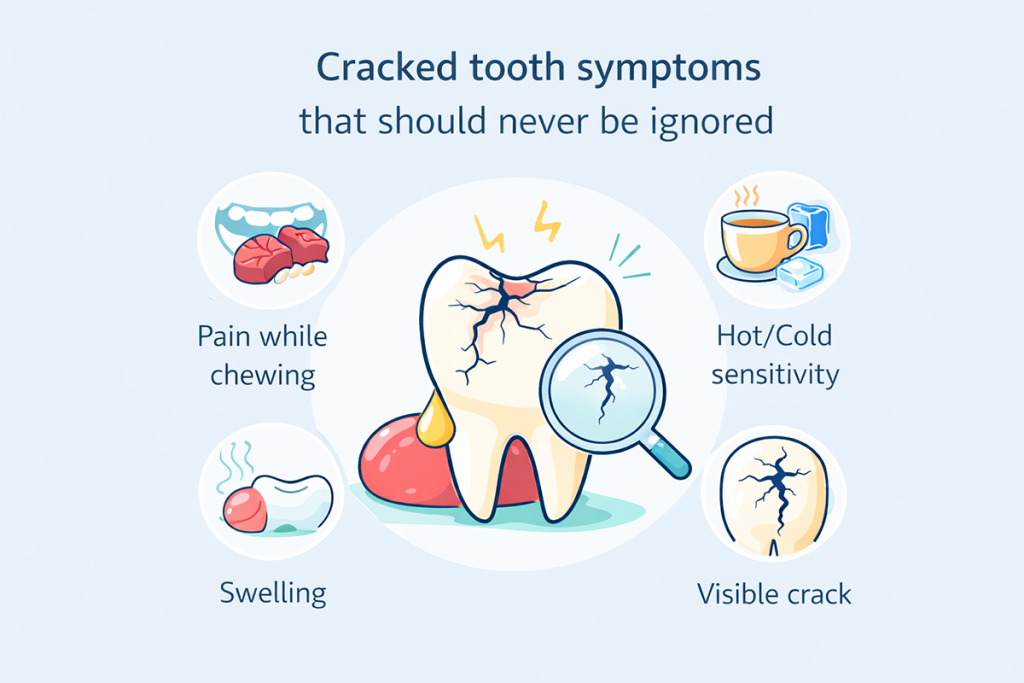
1. Sharp pain while chewing
One of the most noticeable cracked tooth symptoms is sharp pain when biting or chewing. The pain may occur only when releasing pressure, making it difficult to identify the source. This happens because the crack moves slightly under pressure, irritating the inner tooth structures.
2. Sensitivity to hot or cold
A cracked tooth may become sensitive to temperature changes. Hot or cold foods and drinks can trigger discomfort that lingers longer than usual. This sensitivity often signals that the crack has reached deeper layers of the tooth.
3. Pain that comes and goes
Unlike constant toothaches, pain from a cracked tooth often appears intermittently. This on-and-off discomfort leads many people to delay treatment, assuming the problem has resolved. In reality, the crack continues to worsen even when pain temporarily subsides.
4. Swelling around the affected tooth
As bacteria enter the cracked area, the surrounding gum tissue may become irritated or swollen. Swelling is a warning sign that infection may be developing and requires prompt attention.
5. Unexplained discomfort in a specific area
Cracked tooth symptoms may include vague discomfort that is difficult to pinpoint. Patients often describe a feeling that something is not right in a particular area, even if visible damage is not obvious.
6. Visible lines or rough edges on the tooth
In some cases, cracks may be visible as fine lines on the tooth surface or felt as rough edges with the tongue. While not all cracks are visible, any noticeable change in tooth texture should be evaluated.
Common causes behind cracked tooth symptoms
Cracks often develop due to repeated stress on teeth. Chewing ice, hard candies, or nuts can place excessive pressure on tooth enamel. Teeth grinding, especially at night, weakens teeth over time. Sudden injuries, such as falls or sports accidents, can also cause cracks.
Large fillings, age-related enamel wear, and untreated cavities increase the likelihood of cracking. Once a crack forms, normal chewing forces can cause it to spread deeper into the tooth.
What happens if cracked tooth symptoms are ignored
Ignoring cracked tooth symptoms allows damage to progress. Bacteria can enter the inner pulp, leading to inflammation or infection. Over time, this may result in severe pain, abscess formation, or complete tooth fracture.
Delaying treatment often limits restorative options. Minor cracks may be managed with simpler procedures, while advanced damage may require root canal treatment or extraction. Early care significantly improves outcomes.
Why early treatment matters
Early diagnosis helps stabilize the tooth and prevent crack progression. Treatment options may include bonding, crowns, or protective restorations, depending on the severity. Addressing cracked tooth symptoms early often preserves tooth structure and avoids invasive procedures.
Clinics such as Lakewood Dental Smile frequently see cases where timely evaluation could have prevented advanced damage, reinforcing the importance of not delaying care.
When to seek professional evaluation
If you experience pain while chewing, sensitivity, or unexplained discomfort, professional evaluation is essential. Cracked tooth symptoms may be subtle at first, but early assessment leads to simpler treatment and better long-term oral health.