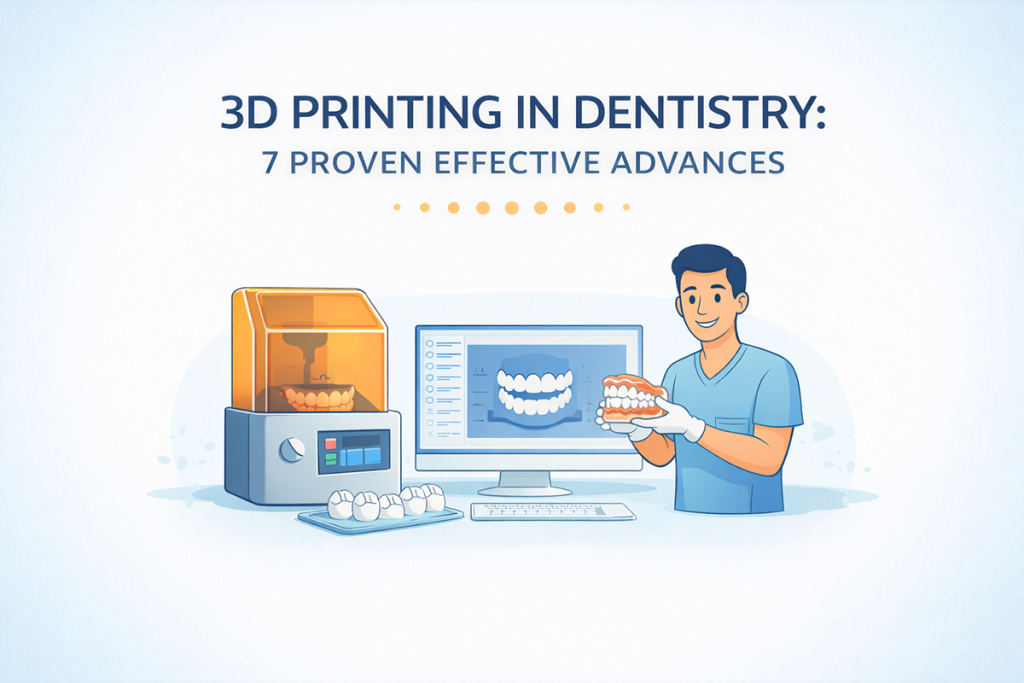
Dental technology has changed significantly in recent years, moving away from manual, time‑intensive processes toward digitally driven systems. Among these innovations, 3d printing in dentistry has become one of the most impactful developments, transforming how dental restorations, appliances, and treatment tools are created. By converting digital scans into highly accurate physical models, this technology allows dental professionals to deliver care that is faster, more consistent, and tailored to individual patients.
Traditional dental manufacturing often relied on physical impressions, external laboratories, and multiple adjustment stages. These steps increased turnaround time and introduced variability. With digitally driven workflows, dental teams can design and produce components with greater control and predictability. Understanding how 3d printing in dentistry fits into modern oral healthcare helps patients appreciate why digital dentistry is becoming a long‑term standard rather than a temporary trend.
One of the most immediate benefits of 3d printing in dentistry is speed. Conventional restorations such as crowns, aligners, or surgical guides often required days or weeks to be fabricated externally. Digital printing allows many of these items to be produced in‑house or through streamlined digital pipelines. This reduces waiting periods and shortens overall treatment timelines, making dental care more efficient for both patients and providers.
Accuracy is another major advantage. Dental treatments demand a high level of precision, as even small discrepancies can affect comfort, bite alignment, and long‑term outcomes. Digital printing uses detailed scans and software‑based designs to create components that closely match a patient’s oral anatomy. This precision minimizes the need for repeated adjustments and supports better functional results across a wide range of treatments.
Personalization has become a defining expectation in modern healthcare, and 3d printing in dentistry directly supports this shift. Each patient’s teeth, jaw structure, and bite pattern are unique. Digital design allows dental professionals to customize restorations, orthodontic appliances, and implant guides specifically for the individual. This patient‑specific approach improves fit, comfort, and overall treatment effectiveness.
Patient experience is also improved through digital workflows. Traditional impressions could be uncomfortable and time‑consuming, particularly for individuals with sensitive gag reflexes or dental anxiety. Digital scanning combined with 3d printing in dentistry reduces the need for physical molds in many cases. Faster scans and better‑fitting components help make dental visits more comfortable and less stressful.
Treatment planning becomes more advanced with the use of printed models and guides. Dentists can visualize complex cases more clearly, simulate outcomes, and plan procedures with greater confidence. These models support clearer communication between dental professionals and patients, helping individuals understand their treatment options and expected results before procedures begin.
The applications of 3d printing in dentistry extend across multiple specialties. In restorative dentistry, it supports the creation of crowns, bridges, and dentures. In orthodontics, it enables custom aligners and retainers. In implant dentistry and oral surgery, printed guides improve placement accuracy and procedural safety. This versatility makes digital printing valuable across diverse dental needs.
Cost efficiency is another long‑term advantage. While the initial investment in digital printing equipment may be significant, ongoing savings often result from reduced laboratory fees, fewer remakes, and streamlined workflows. Over time, these efficiencies can contribute to more accessible and predictable dental care for patients.
As technology continues to evolve, materials used in digital printing are also improving. Stronger, more biocompatible materials expand what can be safely and effectively produced. These advancements further strengthen the role of 3d printing in dentistry as a reliable solution for both short‑term treatments and long‑term oral health planning.
Looking ahead, digital dentistry is expected to continue integrating design software, scanning systems, and printing technologies into unified workflows. This integration supports consistency, accuracy, and personalization at every stage of care. For patients, this means treatments that are not only faster, but also better aligned with individual needs and expectations.
By combining speed, precision, and customization, 3d printing in dentistry represents a meaningful advancement in oral healthcare. As adoption grows, patients are likely to experience improved outcomes, smoother treatment journeys, and greater confidence in modern dental solutions.