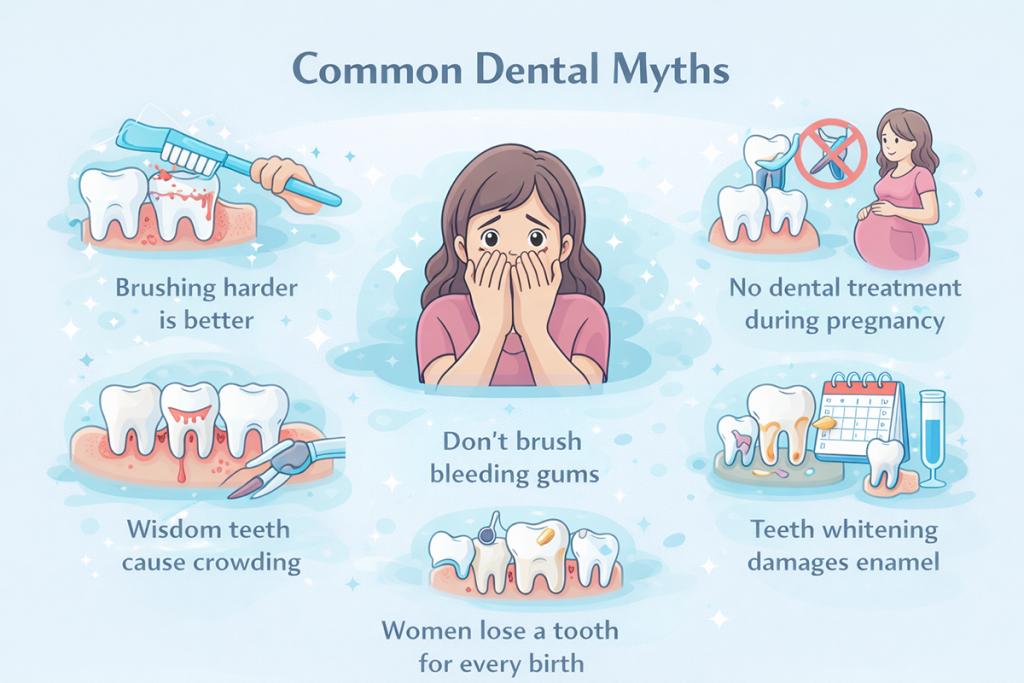
Common dental myths have been passed down through generations, often fueled by fear, misinformation, or isolated bad experiences. Many people develop anxiety about dental visits because of stories they have heard rather than facts they understand. Unfortunately, believing these myths can lead to delayed dental care, worsening oral health, and the need for more complex treatments later.
Common dental myths have been passed down through generations, often fueled by fear, misinformation, or isolated bad experiences. Many people develop anxiety about dental visits because of stories they have heard rather than facts they understand. Unfortunately, believing these myths can lead to delayed dental care, worsening oral health, and the need for more complex treatments later.
Why dental myths persist
Dental myths often persist because oral problems are not always visible in their early stages. When pain eventually occurs, people associate it with dental visits rather than delayed treatment. Cultural beliefs, childhood experiences, and second-hand stories also contribute to misconceptions about dental care.
Addressing common dental myths with accurate information allows patients to approach dental treatment with confidence instead of fear.
Myth: Brushing just before an appointment hides poor oral care
Some people believe brushing right before a dental visit will hide weeks or months of poor oral hygiene. This is not true. Dentists can easily identify plaque buildup, tartar deposits, and gum inflammation regardless of recent brushing.
Some people believe brushing right before a dental visit will hide weeks or months of poor oral hygiene. This is not true. Dentists can easily identify plaque buildup, tartar deposits, and gum inflammation regardless of recent brushing.
Myth: Bleeding gums mean you should stop brushing and flossing
Bleeding gums are often a sign of plaque buildup and early gum disease. Stopping brushing or flossing allows bacteria to accumulate further, worsening the condition.
The truth behind common dental myths is that consistent brushing and flossing are essential for reducing gum inflammation. If bleeding continues, professional cleaning may be required.
Myth: Wisdom tooth removal prevents crowding
Many people believe removing wisdom teeth automatically prevents crowding of other teeth. In reality, crowding is usually caused by jaw size, tooth alignment, and genetic factors.
Many people believe removing wisdom teeth automatically prevents crowding of other teeth. In reality, crowding is usually caused by jaw size, tooth alignment, and genetic factors.
Myth: Brushing harder cleans teeth better
Brushing aggressively does not improve cleanliness. In fact, excessive pressure can wear down enamel and irritate gums, leading to sensitivity and recession.
Among common dental myths, this one often causes long-term damage. Gentle brushing with proper technique is far more effective than forceful brushing.
Myth: Teeth whitening damages enamel
Professional teeth whitening is designed to be safe when done under dental supervision. While temporary sensitivity may occur, enamel damage is unlikely when proper methods are used.
This myth prevents many people from improving their smile unnecessarily. Understanding common dental myths helps separate cosmetic fear from clinical reality.
Myth: Dental treatment should be avoided during pregnancy
Routine dental care such as checkups, cleanings, and fillings is generally safe during pregnancy. In fact, maintaining oral health is important because gum disease can worsen due to hormonal changes.
One of the more harmful common dental myths is avoiding dental visits entirely during pregnancy. Dentists simply adjust treatments to ensure safety.
Myth: Women lose one tooth for every pregnancy
This belief is more folklore than fact. Hormonal changes during pregnancy can increase gum sensitivity, but tooth loss is not inevitable.
With proper oral hygiene and regular dental care, tooth loss is unlikely. This myth highlights how misinformation can create unnecessary fear around dental health.
Believing common dental myths can delay care and increase the risk of serious oral health problems. Accurate information empowers individuals to seek preventive treatment and maintain healthier smiles. Clinics such as Lakewood Dental Smile emphasize patient education as a key part of long-term dental well-being.