
Artificial Intelligence (AI) is steadily transforming many areas of healthcare, and dentistry is no exception. In 2026, AI in dental care is playing a growing role in improving accuracy, efficiency, and patient experience across the dental industry. While AI does not replace dentists, it supports them with smarter tools and better insights, helping deliver more precise and informed care.
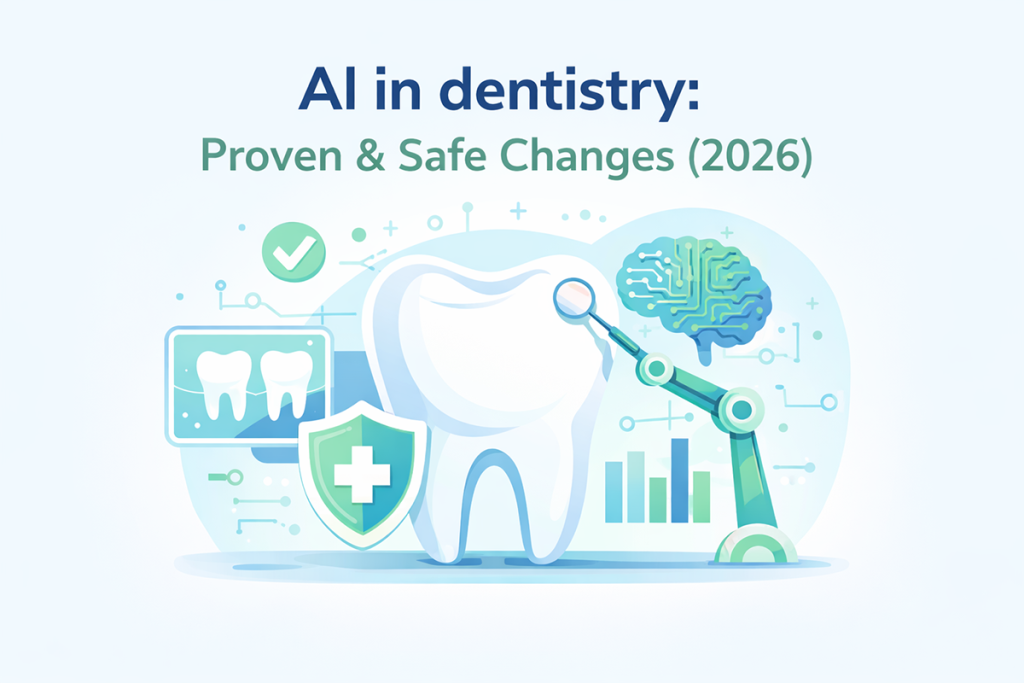
What Is AI in Dental Care?
AI in dental care refers to computer systems that analyze data such as dental X-rays, scans, and patient records to assist dentists in decision-making. These systems use advanced algorithms to detect patterns, identify potential issues early, and support treatment planning.
How AI Is Used in Modern Dentistry
AI is being integrated into dentistry in several practical ways:
- Improved X-ray analysis: AI can help detect cavities, bone loss, and infections at an early stage.
- Treatment planning support: AI tools assist dentists in planning procedures with higher precision.
- Smile design simulations: Patients can preview expected outcomes before cosmetic treatments.
- Workflow efficiency: AI helps streamline scheduling, documentation, and patient communication.
These advancements allow dentists to focus more on patient care while reducing manual effort and errors.
Benefits of AI for Patients
From a patient’s perspective, AI in dental care offers several advantages:
- Early detection of dental problems
- More accurate diagnoses
- Better treatment transparency
- Improved comfort and confidence in care decisions
Even when AI tools work behind the scenes, patients benefit from improved consistency and reliability in dental evaluations.
Does Every Dental Clinic Use AI?
Not all dental clinics use AI-based tools directly, and that is completely normal. Many AI technologies support dentistry at a broader level, such as in imaging software, lab processes, or diagnostic assistance systems. The goal of AI in dentistry is to assist dentists, not replace their expertise or clinical judgment.
How AI Supports Preventive Dentistry
AI in dentistry plays an important role in preventive dental care by helping dentists identify potential problems before they become serious. With the help of AI-supported imaging and data analysis, dentists can monitor changes in tooth structure, gum health, and bone levels more effectively over time. This allows for early intervention, which is often simpler, less expensive, and more comfortable for patients.
Preventive dentistry supported by AI also helps improve patient awareness. Visual insights generated through digital analysis make it easier for patients to understand their oral health condition. When patients clearly see areas of concern, they are more likely to follow preventive advice and maintain better oral hygiene habits. AI in dentistry therefore supports long-term oral health by encouraging timely care and informed decision-making.
The Future of AI in Dentistry
As technology continues to evolve, AI is expected to become more accessible and refined. In the coming years, AI in dental care may further improve preventive dentistry, personalized treatment planning, and patient education—making dental care more efficient and patient-focused.
AI in dental care represents an important shift toward smarter, technology-supported dentistry. Understanding how these advancements work helps patients make informed decisions and stay aware of how modern dental care continues to improve. Staying educated about such developments is a valuable step toward better long-term oral health.
Understanding the Limitations of AI in Dentistry
While AI in dentistry offers many benefits, it is important to understand its limitations. AI systems rely on existing data and patterns, which means they cannot replace a dentist’s clinical experience or judgment. Dentists remain responsible for diagnosis, treatment planning, and patient care decisions. AI is designed to assist, not replace, professional expertise.
Patients should also be aware that AI technology may not be used directly in every dental clinic. However, even indirect use through diagnostic tools or software can still contribute to better accuracy and efficiency in dental care. Understanding these limitations helps set realistic expectations about the role of AI in dentistry.