Cosmetic dentistry has evolved significantly in recent years, moving away from aggressive procedures toward techniques that emphasize preservation, comfort, and long-term oral health. In 2026, cosmetic dentistry trends are strongly shaped by patient demand for treatments that enhance appearance while maintaining natural tooth structure. Rather than dramatic alterations, today’s focus is on subtle refinements guided by advanced technology and conservative clinical philosophy.
People seeking aesthetic improvements are more informed and selective, often prioritizing procedures that require minimal intervention and shorter recovery times. These developments have encouraged dentists to adopt smarter, biologically respectful solutions that deliver natural-looking results. The following trends highlight how cosmetic dentistry continues to progress toward precision-driven, minimally aggressive care that aligns aesthetics with sustainability.
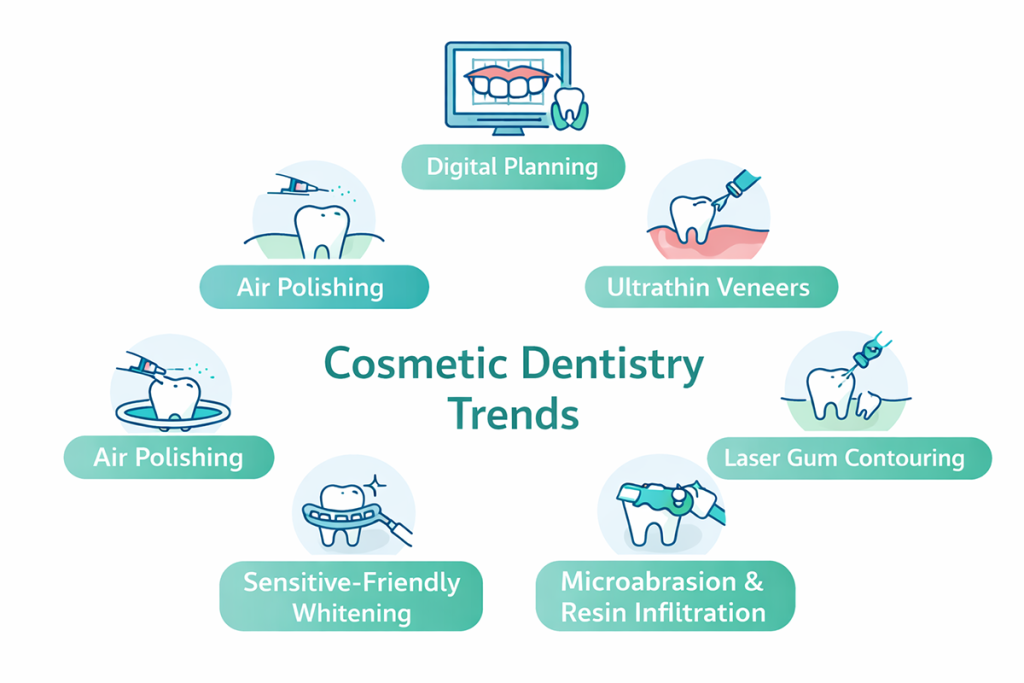
1. Digitally Planned Smile Design
One of the most influential cosmetic dentistry trends is the use of digital smile design for treatment planning. This technology allows dentists to analyze facial proportions, tooth alignment, and symmetry using digital simulations before initiating any physical changes. As a result, unnecessary enamel reduction can often be avoided.
By visualizing outcomes in advance, both clinician and patient gain clarity and confidence. Digital planning supports conservative decision-making and reduces corrective procedures, reinforcing a minimally invasive mindset while still achieving precise aesthetic goals.
2. Ultrathin Porcelain Veneers
Ultrathin veneers have become a cornerstone among modern cosmetic dentistry trends due to their ability to enhance smiles with minimal tooth preparation. Unlike traditional veneers, these advanced restorations often require little to no enamel removal.
Improved ceramic materials provide strength, translucency, and longevity despite their reduced thickness. This allows patients to achieve refined aesthetics while preserving natural tooth structure, which is critical for long-term dental health.
3. Air Polishing for Enamel Preservation
Air polishing has emerged as a preferred method for surface cleaning and stain removal within current cosmetic dentistry trends. Using a gentle combination of air, water, and fine powder, this technique removes surface discoloration with minimal abrasion.
Compared to conventional polishing methods, air polishing improves patient comfort and protects enamel integrity. It is commonly used as a preparatory step before whitening or bonding procedures, ensuring clean surfaces without aggressive instrumentation.
4. Low-Sensitivity Teeth Whitening Systems
Whitening remains one of the most requested aesthetic treatments, and evolving cosmetic dentistry trends emphasize safety alongside effectiveness. Modern whitening protocols now incorporate desensitizing agents and controlled application methods to reduce discomfort.
Custom trays and calibrated in-office systems help deliver uniform results while minimizing enamel stress. These advancements have made whitening accessible even to individuals with sensitivity concerns.
5. Enamel Microabrasion and Resin Infiltration
For mild enamel defects and discolorations, enamel microabrasion and resin infiltration play a growing role in cosmetic dentistry trends. These techniques address surface imperfections without drilling or restorative bulk.
Microabrasion gently removes superficial enamel irregularities, while resin infiltration masks porous lesions internally. Both methods preserve structural integrity while delivering noticeable aesthetic improvement.
6. Laser-Assisted Gum Contouring
Balanced smiles depend on both teeth and gums. Laser-assisted soft tissue contouring has become an important part of cosmetic dentistry trends due to its precision and reduced healing time.
Dental lasers allow controlled reshaping of gum tissue with minimal bleeding and discomfort. This approach enhances smile symmetry while preserving healthy surrounding tissue and avoiding invasive surgical techniques.
7. Biomimetic Composite Bonding
Biomimetic bonding continues to gain popularity within cosmetic dentistry trends for repairing chips, gaps, and minor shape irregularities. Advanced composite materials now closely mimic natural enamel in color and translucency.
This technique preserves healthy tooth structure, is often completed in a single visit, and allows future modifications if aesthetic preferences change. Its flexibility and conservative nature make it a preferred option for many patients.
The cosmetic dentistry trends shaping 2026 reflect a clear commitment to minimally aggressive, patient-focused care. From digital planning and ultrathin restorations to laser-guided gum contouring and enamel-preserving techniques, modern cosmetic dentistry prioritizes precision and preservation. These trends demonstrate how aesthetic improvement can be achieved responsibly, offering patients natural-looking results without compromising long-term oral health.