Dental care mistakes parents make often happen unintentionally, despite good intentions and concern for a child’s health. Many parents believe they are doing everything right, yet small oversights in daily routines can quietly affect a child’s oral development. Because early dental habits shape lifelong oral health, recognizing these mistakes early is essential.
Children rely entirely on parents and caregivers to guide their oral hygiene practices. When incorrect habits are repeated over time, they can lead to cavities, gum problems, fear of dental visits, and even alignment issues later in life. Understanding common dental care mistakes parents make helps families build healthier routines and prevent avoidable problems.
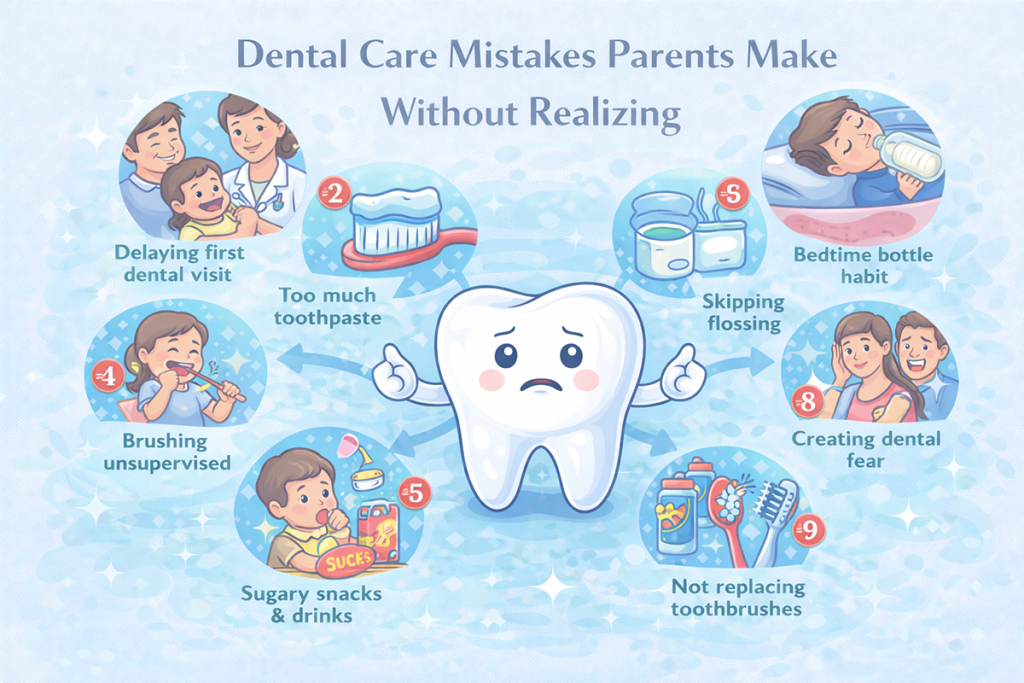
Delaying the first dental visit
One of the most common dental care mistakes parents make is waiting too long for a child’s first dental visit. Many assume dental care is unnecessary until multiple teeth appear or a problem develops.
Dental experts recommend a child’s first dental visit by their first birthday or within six months of the first tooth erupting. Early visits help detect issues early and familiarize children with the dental environment.
Using too much toothpaste
Parents often believe more toothpaste means better cleaning. In reality, using too much fluoride toothpaste can increase the risk of fluorosis in young children.
For children under two, only a smear of toothpaste is recommended. For children aged two to five, a pea-sized amount is sufficient. Supervising toothpaste use ensures children receive protection without unnecessary exposure.
Allowing children to brush unsupervised too early
Many children lack the coordination to brush effectively until around six to eight years of age. Allowing children to brush independently too early can leave plaque behind, especially along the gumline and back teeth.
Parents should assist or closely supervise brushing to ensure proper technique and complete coverage. This guidance helps establish strong habits while protecting developing teeth.
Skipping flossing for children
Flossing is often overlooked in children’s oral care routines. Parents may assume flossing is unnecessary for baby teeth or difficult to manage.
However, plaque buildup between teeth can lead to cavities even in primary teeth. Introducing flossing early helps prevent decay and supports healthy gums as adult teeth emerge.
Frequent sugary snacks and drinks
Regular exposure to sugary foods and drinks is one of the most damaging dental care mistakes parents make. Snacks like sweets, flavored milk, and fruit juices feed bacteria that produce acids harmful to enamel.
Limiting sugar intake and encouraging water between meals reduces acid attacks and supports stronger teeth.
Using bottles or sippy cups at bedtime
Allowing children to fall asleep with bottles containing milk or juice exposes teeth to sugar for extended periods. This practice can lead to early childhood cavities, sometimes called baby bottle tooth decay.
Water is the safest option at bedtime, and establishing this habit early protects young teeth.
Ignoring early signs of dental problems
Parents may overlook early signs such as white spots, sensitivity, or gum redness, assuming these changes are temporary.
These signs often indicate the beginning of decay or gum issues. Addressing them early prevents progression and reduces the need for invasive treatments later.
Creating fear around dental visits
Negative language or sharing unpleasant dental experiences can unintentionally create fear in children. Dental anxiety often begins at home, shaped by parental attitudes.
Using positive language and treating dental visits as a normal part of healthcare helps children develop confidence and trust.
Not replacing toothbrushes regularly
Worn toothbrushes are less effective and can harbor bacteria. Parents may forget to replace children’s toothbrushes every three to four months or after illness.
Fresh, soft-bristled toothbrushes support better cleaning and encourage children to brush comfortably.
Why correcting these mistakes matters
Early dental habits influence oral health for decades. The dental care mistakes parents make may seem small, but their long-term effects can be significant. Prevention, guidance, and consistency are far more effective than treating problems after they develop.
Regular dental checkups support parents by offering personalized advice and early intervention. Clinics such as Lakewood Dental Smile focus on preventive care and parental education to help children build strong, healthy smiles from an early age.
Raising children with healthy oral habits requires awareness, patience, and consistency. By recognizing dental care mistakes parents make and correcting them early, families can protect children from unnecessary pain, anxiety, and long-term dental issues. Small changes in daily routines can lead to lifelong benefits, ensuring children grow up with confident smiles and healthier mouths.