Early signs of dental problems often appear quietly and may not cause immediate pain, which is why many people overlook them. Ignoring these early warnings can allow minor issues to progress into more serious dental conditions that require complex treatment. Understanding what to watch for helps individuals take timely action and protect their long-term oral health.
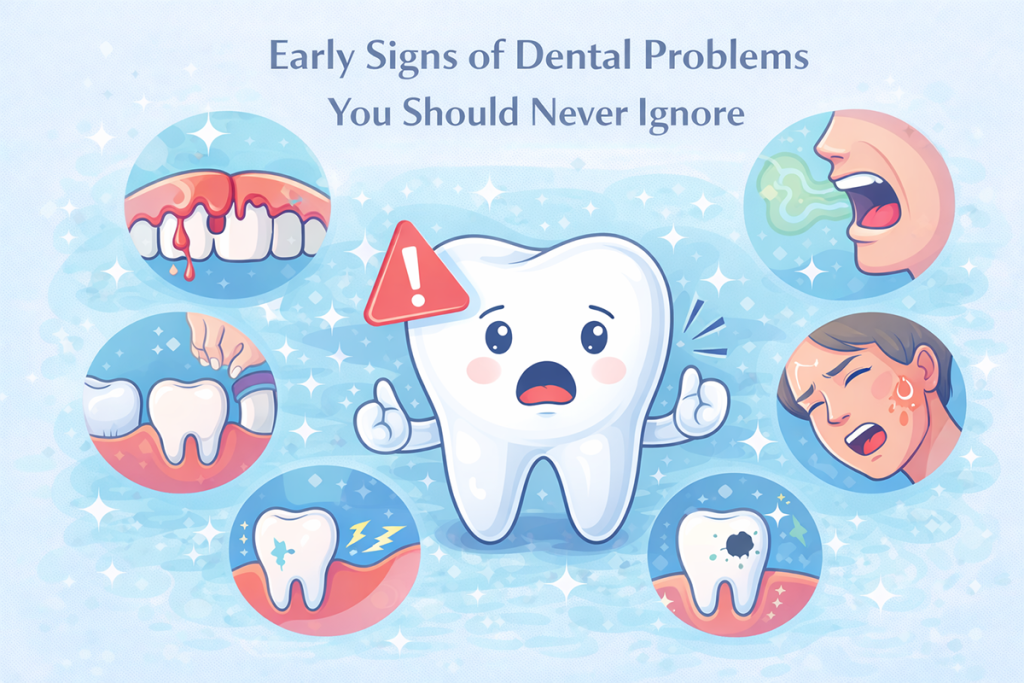
Dental problems rarely develop overnight. They usually begin with subtle changes in the mouth that worsen gradually if left untreated. Paying attention to these early signs of dental problems can help prevent discomfort, tooth loss, and costly procedures later.
Persistent bad breath
Occasional bad breath is common, but persistent or chronic bad breath may signal an underlying dental issue. Bacteria buildup, gum disease, dry mouth, or untreated cavities can all contribute to ongoing odor.
If regular brushing, flossing, and mouthwash fail to resolve bad breath, it may indicate infection or plaque buildup that requires professional evaluation.
Bleeding or swollen gums
Healthy gums should not bleed during brushing or flossing. Bleeding, redness, or swelling of the gums is often one of the earliest signs of gum disease.
Gingivitis, the early stage of periodontal disease, is reversible when addressed promptly. Ignoring gum bleeding can allow the condition to progress into more serious gum infections that damage supporting bone.
Tooth sensitivity
Sensitivity to hot, cold, sweet, or acidic foods may indicate enamel erosion, gum recession, or early decay. Tooth sensitivity is a common but often underestimated warning sign.
When sensitivity becomes frequent or intense, it suggests that protective enamel may be wearing away, exposing underlying layers of the tooth.
Persistent toothache or discomfort
Mild tooth discomfort that comes and goes should not be ignored. Even low-level pain may indicate early decay, infection, or pressure from impacted teeth.
Pain is the body’s way of signaling that something is wrong. Early intervention can often prevent the need for more invasive treatment.
White or dark spots on teeth
Changes in tooth color, such as white chalky spots or dark patches, may be early indicators of demineralization or decay. White spots often represent the first stage of cavity formation.
Addressing these changes early allows enamel to be strengthened and decay progression to be slowed or reversed.
Receding gums
Gums that appear to pull away from the teeth can expose tooth roots and increase sensitivity. Gum recession may result from aggressive brushing, gum disease, or aging.
Receding gums are an important early sign of dental problems and should be evaluated to prevent further tissue and bone loss.
Loose teeth or changes in bite
Teeth that feel loose or changes in how teeth fit together when biting can indicate advanced gum disease or bone loss. Even slight movement should be taken seriously.
Early detection allows stabilization and prevents permanent tooth loss.
Jaw pain or clicking
Pain, stiffness, or clicking sounds in the jaw may signal temporomandibular joint issues or misalignment. These symptoms can worsen over time if left untreated.
Jaw discomfort may also be linked to teeth grinding or bite problems that require professional care.
Mouth sores that do not heal
Occasional mouth sores are common, but sores that persist longer than two weeks may indicate infection or other underlying concerns.
Persistent sores should always be examined to rule out serious conditions and ensure proper treatment.
Why early detection matters
Recognizing early signs of dental problems allows treatment to begin when conditions are easier and less expensive to manage. Preventive care helps maintain comfort, function, and confidence while reducing long-term health risks.
Regular dental evaluations support early detection and personalized guidance. Clinics such as Lakewood Dental Smile emphasize patient education and early intervention as key elements of oral health preservation.
Dental health plays a vital role in overall well-being. Listening to your body and responding to early changes in your mouth can prevent serious complications. By recognizing early signs of dental problems and seeking timely care, individuals can protect their smiles and maintain healthier teeth and gums throughout life.