Early signs of gum disease often appear subtly, making them easy to ignore during daily routines. Many people assume gum problems only occur when there is severe pain, but gum disease usually begins quietly and progresses over time. Identifying these early symptoms allows treatment to begin before permanent damage occurs to the gums and supporting bone.
Gum disease, also known as periodontal disease, develops when plaque builds up along the gumline. If plaque is not removed effectively, it hardens into tartar and irritates the gums, leading to inflammation and infection. Understanding the early signs of gum disease is essential for maintaining long-term oral health and preventing tooth loss.
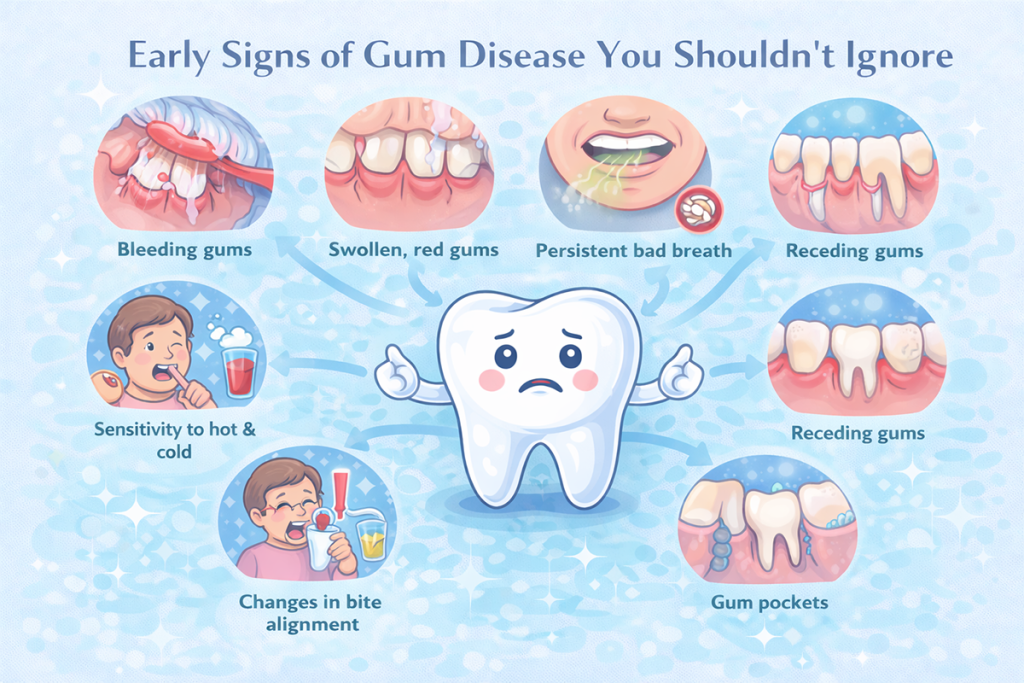
Bleeding gums during brushing or flossing
One of the most common early warning signs is bleeding gums. Healthy gums should not bleed during normal brushing or flossing. Occasional bleeding may seem harmless, but frequent bleeding is often a sign of gingivitis, the earliest stage of gum disease.
Ignoring bleeding gums can allow inflammation to worsen and spread deeper into the gum tissues.
Red, swollen, or tender gums
Gums affected by early gum disease often appear red or swollen instead of firm and pink. Tenderness or discomfort along the gumline may also be present.
Swelling occurs as the body responds to bacterial buildup, and without treatment, this inflammation can progress into more severe periodontal conditions.
Persistent bad breath
Chronic bad breath that does not improve with brushing or mouthwash may indicate gum disease. Bacteria trapped beneath the gumline release toxins that cause unpleasant odors.
Persistent bad breath is one of the overlooked early signs of gum disease and should not be dismissed as a minor issue.
Receding gums
When gums begin to pull away from the teeth, they expose more of the tooth surface and root. This recession may happen gradually, making it difficult to notice at first.
Receding gums increase sensitivity and create spaces where bacteria can accumulate, accelerating disease progression.
Sensitivity to hot or cold
Gum recession and inflammation can expose sensitive areas of the teeth. Sensitivity to temperature changes may signal that gum tissue is no longer protecting the tooth roots effectively.
While sensitivity can have several causes, it is often associated with early gum problems.
Changes in bite or tooth alignment
Subtle changes in how teeth fit together when biting may occur as gum disease affects the supporting structures of the teeth. Teeth may feel slightly loose or shift position.
These changes are serious indicators that gum disease may be advancing beyond its early stage.
Formation of gum pockets
As gum disease develops, pockets can form between the teeth and gums. These spaces trap bacteria and plaque, making them difficult to clean with regular brushing.
Early detection of gum pockets helps prevent deeper infections and bone loss.
Why early detection is critical
The early signs of gum disease are often painless, which is why many people delay seeking care. However, gum disease is far easier to manage in its initial stages than in advanced forms.
Preventive dental visits allow professionals to identify inflammation early and provide guidance tailored to individual oral health needs. Clinics such as Lakewood Dental Smile emphasize early diagnosis and patient education as part of long-term gum health preservation.
How to reduce your risk
Maintaining good oral hygiene is the most effective way to prevent gum disease. Brushing twice daily, flossing regularly, and limiting sugary foods help reduce plaque buildup.
Regular dental checkups ensure that plaque and tartar are removed professionally and that early gum changes are addressed promptly.
Gum disease does not develop overnight, and its earliest signs are often subtle. Paying attention to changes in your gums, breath, and tooth sensitivity can prevent long-term damage. By recognizing the early signs of gum disease and taking timely action, individuals can protect their gums, preserve their teeth, and maintain a healthy smile for life.