Many people think gum problems are minor and temporary, especially when there is no pain involved. Bleeding while brushing or mild swelling is often ignored or blamed on brushing too hard. In reality, these are often the earliest indicators of a progressing condition. Recognizing the early signs of gum disease is essential because gum problems rarely resolve on their own and tend to worsen silently over time.
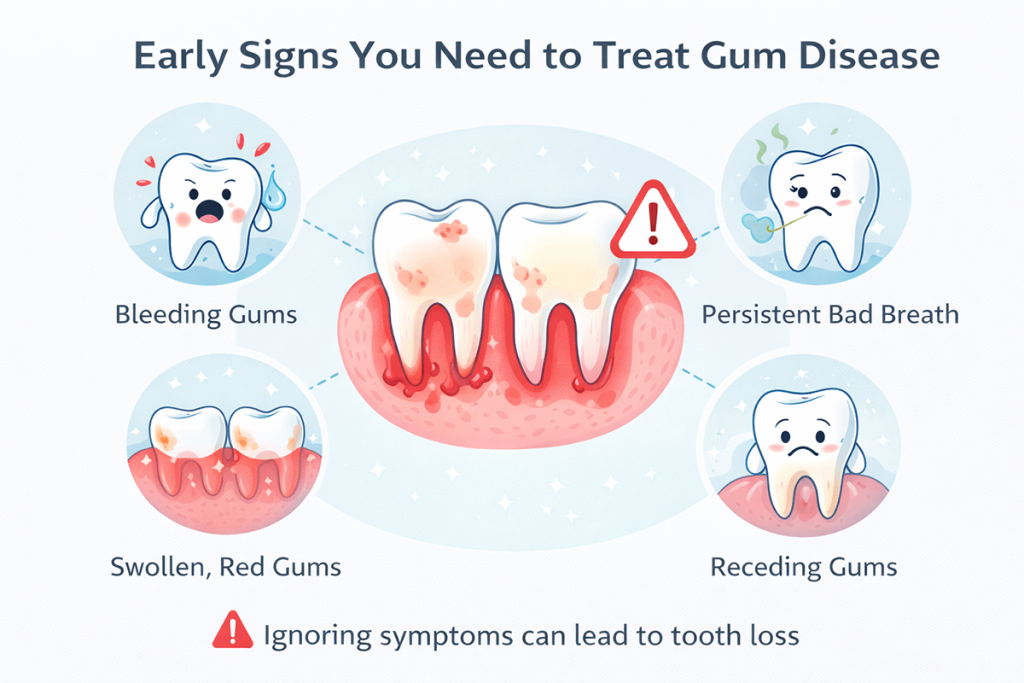
One of the first warning signs is bleeding gums during brushing or flossing. Healthy gums do not bleed easily. When bleeding becomes frequent, it usually indicates inflammation caused by plaque buildup along the gumline. This inflammation is the body’s response to bacteria and is one of the clearest early signs of gum disease. Ignoring bleeding allows bacteria to spread deeper below the gums, making treatment more difficult later.
Persistent bad breath is another symptom many people overlook. Occasional bad breath can be caused by food or dry mouth, but ongoing unpleasant odor often signals bacterial activity under the gums. These bacteria release toxins that irritate gum tissue and contribute to inflammation. When bad breath continues despite good oral hygiene, it should be considered among the early signs of gum disease that need professional attention.
Swollen, tender, or red gums are also common early indicators. Healthy gums are firm and pale pink. When gums appear red, puffy, or feel sore to the touch, it suggests inflammation. At this stage, the condition may still be reversible with proper care. However, delaying treatment allows the inflammation to spread and damage the structures that support the teeth. This progression explains why early signs of gum disease should never be dismissed.
Gum recession is another warning sign that develops gradually. When gums pull away from the teeth, more of the tooth surface becomes exposed. This can lead to sensitivity and an increased risk of decay along the roots. Many people assume gum recession is a normal part of aging, but it is often linked to ongoing gum disease. Identifying this change early helps prevent permanent damage.
Another important sign is increased tooth sensitivity, especially near the gumline. As gums recede and inflammation progresses, the protective layers around the teeth weaken. This exposes sensitive areas that react to hot, cold, or sweet foods. Sensitivity combined with other symptoms often confirms early signs of gum disease rather than simple enamel wear.
As gum disease advances without treatment, it begins to affect the bone that supports the teeth. Teeth may start to feel loose or shift slightly in position. This stage develops slowly and is often painless, which is why many people are unaware of the damage occurring beneath the surface. Recognizing the early signs of gum disease before reaching this stage is critical for preserving natural teeth.
Many people do not realize that gum disease progresses in stages, and the early stage often causes little to no pain. In the beginning, bacteria collect along the gumline and trigger inflammation, but the damage remains limited to the gums themselves. Because there is no severe discomfort, people delay care, assuming the problem is harmless. Over time, these bacteria move deeper below the gums, destroying the connective tissue and bone that hold teeth in place. This slow progression is the reason the early signs of gum disease are so dangerous. By the time teeth feel loose or painful, significant damage has already occurred. Early detection allows treatment to stop the disease before it reaches advanced stages where tooth loss becomes unavoidable.
Ignoring gum disease does not just affect oral health. Research has shown links between gum disease and other health conditions, including heart disease and diabetes complications. Chronic inflammation in the mouth can influence overall health, making early detection and management even more important.
The good news is that gum disease is highly manageable when caught early. Professional cleanings, improved oral hygiene habits, and regular dental checkups can stop progression and restore gum health. Understanding and responding to the early signs of gum disease helps prevent tooth loss, discomfort, and long-term complications.
Toward the end of preventive care discussions, professional evaluation plays a key role in confirming gum health and guiding treatment decisions. At Lakewood Dental Smile, early identification of gum inflammation is approached with a focus on prevention, education, and preserving natural teeth before irreversible damage occurs.