Early warning signs of tooth decay often appear quietly and are easy to overlook. Many people believe tooth decay becomes a concern only when pain starts, but damage usually begins long before discomfort is noticeable. Understanding these early indicators can help protect enamel and prevent minor problems from turning into serious dental conditions.
Tooth decay develops when acids produced by bacteria slowly weaken the enamel. This process takes time, which is why recognizing the early warning signs of tooth decay is essential for timely care and effective prevention.
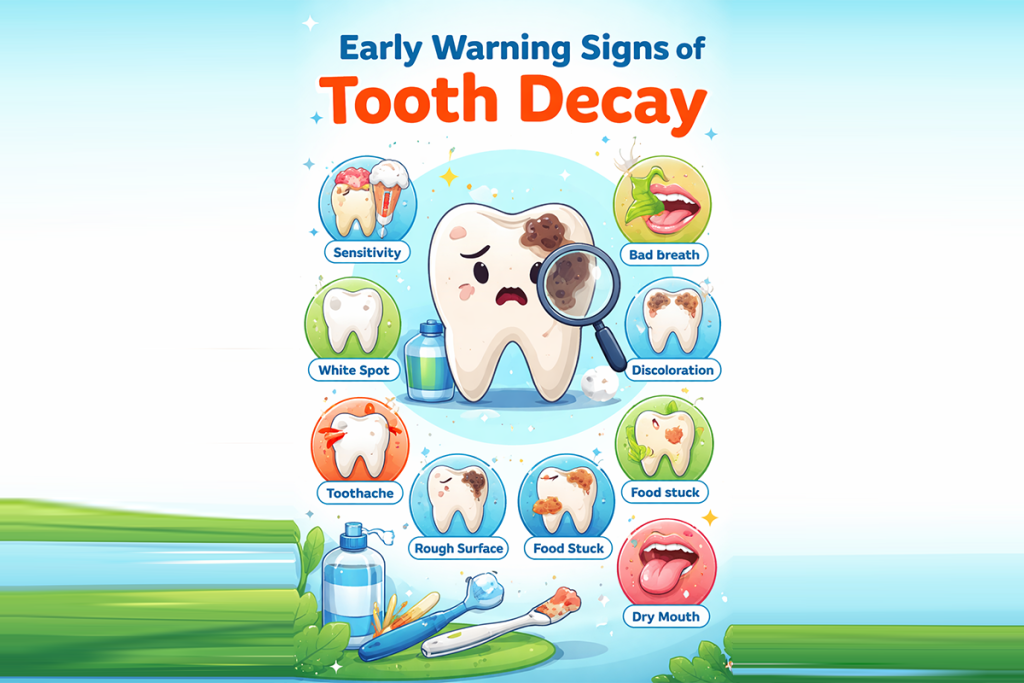
Tooth sensitivity to hot or cold
One of the most common early warning signs of tooth decay is increased sensitivity. Teeth may respond sharply to hot drinks, cold foods, or even cool air.
This sensitivity occurs when enamel begins to thin and exposes the inner layers of the tooth. While occasional sensitivity can be harmless, repeated discomfort often signals early decay.
White or chalky spots on teeth
White spots on the surface of teeth are another early warning sign of tooth decay. These spots indicate mineral loss from enamel caused by acid exposure.
At this stage, decay may still be reversible with improved oral hygiene and fluoride treatments. Ignoring these early warning signs of tooth decay allows the damage to progress deeper into the tooth.
Persistent bad breath
Bad breath that does not improve with brushing or mouthwash can be linked to bacterial buildup in decaying areas. When enamel weakens, bacteria thrive and release unpleasant odors.
Persistent bad breath is one of the commonly ignored early warning signs of tooth decay and should not be dismissed as a minor hygiene issue.
Discoloration or dark spots
Brown or dark spots on teeth may indicate decay beneath the enamel surface. Unlike surface stains, these spots usually do not disappear with regular brushing.
Discoloration is an important early warning sign of tooth decay that often requires professional evaluation to prevent further damage.
Rough or uneven tooth surfaces
Healthy teeth feel smooth when you run your tongue over them. Rough patches, pits, or uneven areas can indicate enamel breakdown.
Changes in tooth texture are subtle but meaningful early warning signs of tooth decay that may appear before pain develops.
Mild toothache or pressure discomfort
Occasional discomfort when biting or chewing can signal early decay. Mild toothaches may come and go, making them easy to ignore.
However, recurring pressure sensitivity is among the more serious early warning signs of tooth decay and suggests the damage may be spreading.
Food getting stuck frequently
When decay creates small pits or grooves, food may become trapped more often. This encourages bacterial growth and speeds up enamel erosion.
Frequent food trapping is another practical early warning sign of tooth decay that many people overlook.
Why early detection matters
Detecting decay early allows for simpler treatments such as fluoride therapy or small fillings. Once decay reaches deeper layers, more invasive procedures may be needed.
Dental professionals often stress the importance of early diagnosis. Clinics like Lakewood Dental Smile focus on educating patients to recognize early warning signs before irreversible damage occurs.
How to reduce your risk
Brushing twice daily, flossing regularly, and limiting sugary foods significantly reduce the risk of decay. Drinking water after meals and using fluoride toothpaste also help protect enamel.
Combining good oral hygiene with awareness of symptoms is the most effective way to prevent cavities.
The early warning signs of tooth decay are often subtle but should never be ignored. Sensitivity, discoloration, texture changes, and persistent bad breath can all signal early damage. Recognizing these signs early helps protect enamel, preserve natural teeth, and maintain long-term oral health.