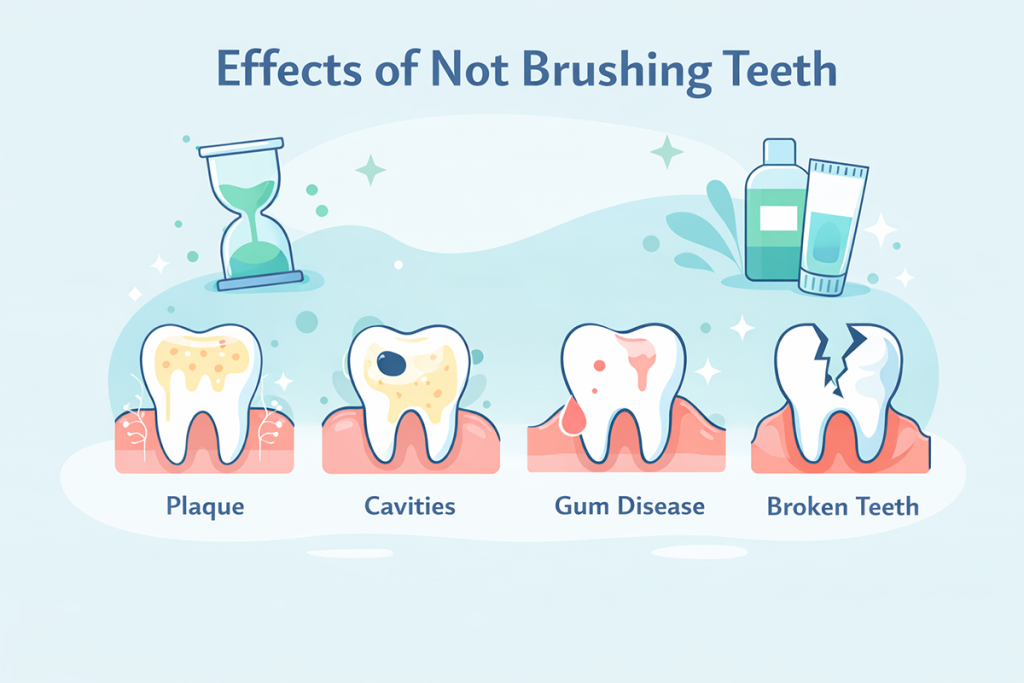
Effects of not brushing teeth often begin much earlier than most people realize. Many assume skipping brushing occasionally causes little harm, but oral health can deteriorate quickly without daily care. The mouth constantly hosts bacteria that feed on food particles, especially sugars. When brushing is neglected, these bacteria multiply, forming plaque and producing acids that damage enamel and irritate gums.
Before modern toothbrushes existed, people used twigs, cloths soaked in saltwater, or frayed sticks to clean their teeth. While these methods offered minimal cleaning, they were far less effective than modern oral hygiene tools. Understanding the effects of not brushing teeth helps highlight why consistent daily brushing is essential for maintaining healthy teeth and gums.
What happens when brushing is skipped
Brushing removes plaque, food debris, and harmful bacteria from the tooth surface. When this routine is skipped, plaque begins to accumulate almost immediately. Over time, plaque hardens into tartar, which cannot be removed through brushing alone and requires professional cleaning.
The effects of not brushing teeth extend beyond appearance. Oral bacteria can trigger inflammation, weaken tooth structure, and increase the risk of infections. These changes often progress silently until noticeable damage occurs.
After one day without brushing
Within 24 hours of not brushing, a thin layer of plaque starts forming on the teeth. While serious damage is unlikely after just one day, bacteria begin multiplying rapidly. This early plaque buildup marks the first stage in the effects of not brushing teeth.
Bad breath is often the earliest noticeable symptom. Food particles trapped between teeth begin to break down, releasing unpleasant odors. Although this stage is reversible, continued neglect accelerates further damage.
After one week without brushing
After about seven days, plaque thickens and spreads along the gumline. At this stage, gums may become swollen, tender, or begin bleeding, indicating the onset of gingivitis. Gingivitis is the mildest form of gum disease but should not be ignored.
One of the more concerning effects of not brushing teeth for a week is increased gum inflammation. If left untreated, this condition can progress into more serious periodontal disease.
After one month without brushing
After a month, bacteria in the mouth become more aggressive. Gums may appear red and irritated, and teeth can feel weaker or sensitive. White spots may develop on the enamel, signaling early mineral loss.
At this stage, visible effects of not brushing teeth include discoloration, persistent bad breath, and increased cavity risk. Enamel damage becomes more noticeable, and the chances of long-term tooth decay rise significantly.
After one year without brushing
After a year without brushing, oral health can deteriorate severely. Plaque and tartar may cover large portions of the teeth. Multiple cavities are likely, and teeth may crack or break due to weakened enamel.
Among the most severe effects of not brushing teeth are chronic gum infections, tooth loss, constant pain, and difficulty chewing. At this point, extensive dental treatment is often required to restore basic oral function.
Why daily brushing is essential
Daily brushing removes plaque before it hardens and disrupts bacterial growth. It also strengthens enamel when combined with fluoride toothpaste and supports healthy gums. Consistent brushing reduces the likelihood of cavities, gum disease, and costly dental treatments.
Understanding the effects of not brushing teeth reinforces why brushing twice daily is one of the simplest yet most effective preventive health habits.
Oral health depends heavily on daily habits. Brushing may seem routine, but neglecting it can lead to serious and sometimes irreversible damage. Awareness of these risks encourages better care and long-term prevention. Clinics such as Lakewood Dental Smile emphasize patient education and preventive practices as the foundation of lasting oral health.