Foods that damage teeth are often part of everyday meals, which is why many people do not realize the harm they cause. While brushing and flossing are essential, diet plays an equally important role in maintaining oral health. Certain foods quietly weaken enamel, promote plaque buildup, and increase the risk of cavities when consumed frequently.
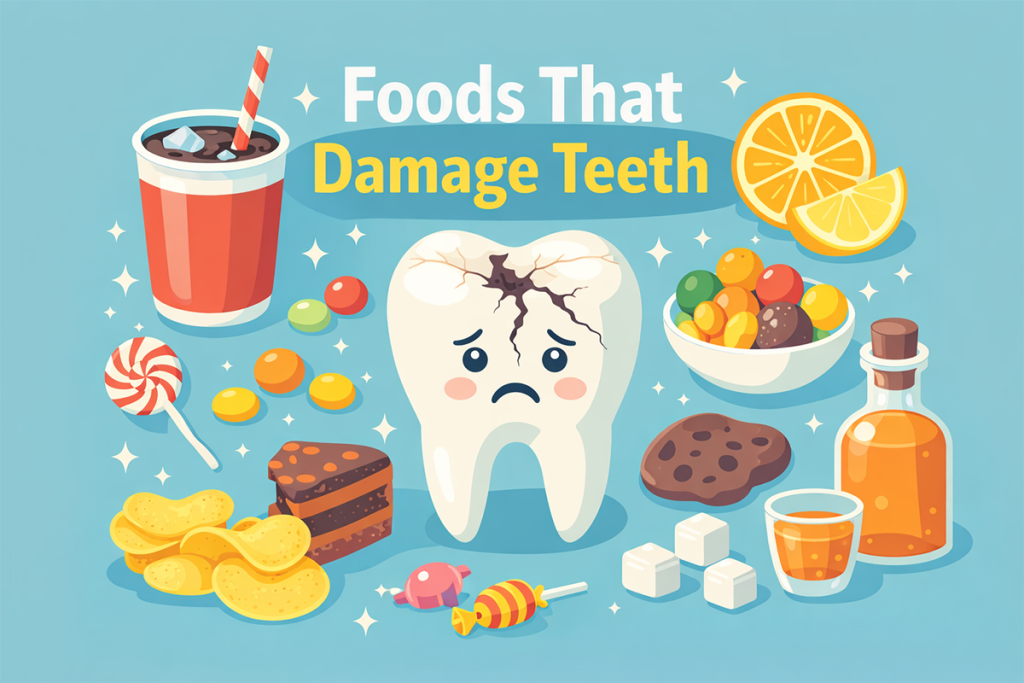
Tooth enamel is the hardest substance in the human body, but it is not invincible. Repeated exposure to acids and sugars slowly erodes this protective layer. Understanding which foods affect your teeth allows you to make smarter dietary choices that protect enamel and support long-term oral health.
Sugary snacks and sweets
Candies, chocolates, pastries, and desserts are among the most well-known foods that damage teeth. Sugar feeds harmful bacteria in the mouth, which then produce acids that attack tooth enamel. Sticky sweets are especially harmful because they cling to teeth and prolong acid exposure.
Reducing sugar intake and limiting sweets to mealtimes helps minimize damage and gives saliva time to neutralize acids.
Carbonated soft drinks
Soft drinks contain high levels of acid and sugar, making them particularly damaging to enamel. Even sugar-free sodas are acidic enough to weaken tooth surfaces over time.
Frequent sipping keeps teeth under constant acid attack. Choosing water instead of soda significantly reduces enamel erosion.
Citrus fruits and juices
Oranges, lemons, grapefruits, and their juices are nutritious but highly acidic. Regular exposure to citrus acids can soften enamel, especially when consumed throughout the day.
Rinsing the mouth with water after eating citrus foods helps neutralize acids and protect teeth.
Starchy foods
Foods like bread, chips, crackers, and pasta break down into sugars in the mouth. These carbohydrates can become trapped between teeth and fuel bacterial growth.
Maintaining proper oral hygiene after consuming starchy foods reduces plaque buildup and cavity risk.
Dried fruits
Dried fruits such as raisins, dates, and apricots are often considered healthy snacks, but they are concentrated sources of sugar and stick easily to teeth.
Their sticky texture allows sugars to remain on tooth surfaces longer, increasing the chance of decay.
Alcoholic beverages
Alcohol reduces saliva production, leading to dry mouth. Saliva is essential for washing away food particles and neutralizing acids.
Dry mouth increases the risk of cavities and gum disease, making alcohol one of the overlooked foods that damage teeth when consumed frequently.
Ice chewing
Chewing ice may seem harmless, but it places excessive pressure on teeth. This habit can cause micro-cracks in enamel and even lead to fractures over time.
Avoiding ice chewing helps preserve tooth structure and prevent unnecessary damage.
Highly acidic condiments
Vinegar-based dressings, pickles, and sauces contain acids that weaken enamel when consumed often. These foods can increase sensitivity and enamel erosion.
Balancing acidic foods with neutral options helps protect tooth surfaces.
Why frequency matters more than quantity
The frequency of consuming foods that damage teeth matters more than the amount. Repeated snacking exposes teeth to constant acid attacks, leaving little time for enamel recovery.
Limiting snacking and drinking water between meals supports saliva production and enamel repair.
Protecting your teeth without giving up favorite foods
Completely avoiding certain foods may not be realistic. However, simple habits such as rinsing with water, waiting before brushing after acidic meals, and maintaining regular dental checkups significantly reduce harm.
Dental professionals can also provide personalized advice on diet and oral care. Clinics such as Lakewood Dental Smile emphasize preventive guidance to help patients protect enamel while maintaining balanced diets.
Diet has a powerful influence on oral health. Many foods that damage teeth are common and easy to overlook, but awareness makes prevention possible. By understanding how everyday foods affect enamel and adjusting eating habits accordingly, individuals can reduce cavities, protect tooth strength, and maintain healthier smiles over the long term.