Foods that damage teeth are often part of daily meals, and many people consume them without realizing how slowly they affect oral health. Even individuals who brush regularly and visit the dentist can develop cavities or sensitivity because certain foods weaken tooth enamel and support harmful bacteria. The damage usually happens gradually, which is why it often goes unnoticed until discomfort begins.
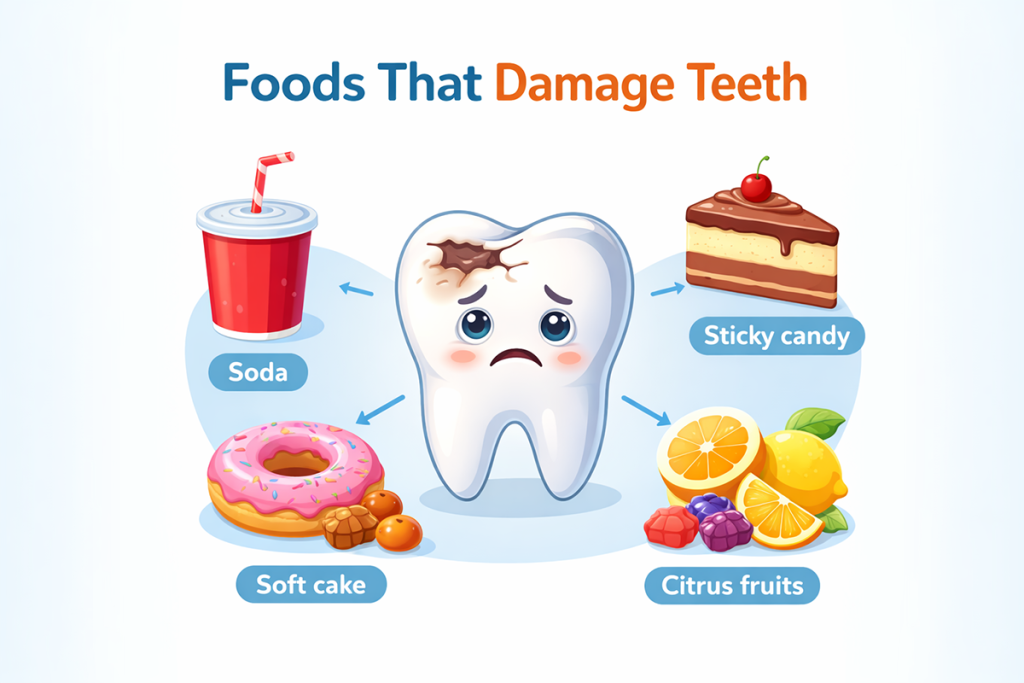
Understanding how everyday foods affect teeth helps people make smarter choices without completely changing their diet. Small adjustments can make a big difference in long-term oral health.
Sugary snacks and sweets
Sugary foods such as chocolates, candies, cakes, and desserts are among the most common foods that damage teeth. Sugar feeds bacteria present in the mouth, and these bacteria produce acids that attack tooth enamel. Repeated exposure to sugar throughout the day increases acid attacks and reduces the time enamel has to recover.
Frequent snacking on sweets is more harmful than eating them occasionally with meals, because the mouth remains acidic for longer periods.
Soft drinks and fizzy beverages
Carbonated drinks are harmful because they contain both sugar and acids. Even sugar-free soft drinks are acidic and can erode enamel. Sipping these drinks slowly exposes teeth to acids for extended periods, leading to enamel thinning and tooth sensitivity.
Drinking water after consuming fizzy drinks helps wash away acids and reduces damage.
Fruit juices and flavored drinks
Many people consider fruit juice healthy, but it can still harm teeth. Natural sugars and acids found in juices, especially citrus-based ones, weaken enamel when consumed frequently. Sipping juice throughout the day keeps teeth under constant acid exposure.
Limiting juice intake and choosing whole fruits instead provides nutrition while protecting teeth.
Sticky foods
Sticky foods such as dried fruits, caramel, and chewy sweets cling to teeth longer than other foods. This makes it harder for saliva to wash them away, allowing bacteria to produce acids for extended periods. Even foods that seem healthy can cause problems if they remain stuck on teeth.
Good oral hygiene after eating sticky foods is essential to reduce decay risk.
Refined carbohydrates and starchy foods
Foods like chips, crackers, white bread, and processed snacks break down into sugars inside the mouth. These sugars feed bacteria and contribute to plaque buildup. Small food particles can remain between teeth, increasing the chance of cavities.
Regular flossing helps remove trapped food and supports healthier gums.
Acidic foods
Citrus fruits, tomatoes, pickled foods, and vinegar-based dressings are acidic and can soften enamel. While these foods have nutritional benefits, frequent exposure weakens teeth over time. Brushing immediately after eating acidic foods can worsen enamel erosion.
Rinsing the mouth with water and waiting before brushing helps protect enamel.
Alcoholic drinks
Alcohol reduces saliva production, leading to dry mouth. Saliva plays an important role in neutralizing acids and washing away bacteria. With reduced saliva, teeth become more vulnerable to decay and gum disease.
Drinking water along with alcohol helps maintain moisture in the mouth.
Energy and sports drinks
Energy drinks and sports drinks often contain high levels of sugar and acid. Many people consume them regularly without realizing they are among the most damaging beverages for teeth. Frequent use increases the risk of enamel erosion and cavities.
Water remains the safest option for hydration and oral health.
Hard foods and ice chewing
Chewing ice or hard candies can crack or chip teeth. Small fractures weaken tooth structure and may lead to sensitivity or infection. Avoiding hard chewing habits helps preserve tooth strength and reduces emergency dental visits.
Why awareness matters
Being aware of foods that damage teeth allows people to make informed decisions without giving up their favorite foods completely. Moderation, good oral hygiene, and proper timing of brushing all help reduce harm. Dental professionals often stress that prevention is easier and less costly than treatment.
Clinics such as Lakewood Dental Smile encourage patients to understand how daily food choices affect long-term oral health.
Teeth are affected by everyday eating habits more than many people realize. Sugary, acidic, sticky, and processed foods gradually weaken enamel and irritate gums, leading to avoidable dental problems. By understanding foods that damage teeth and making simple lifestyle changes, people can protect their smile and maintain healthier teeth over time.