How stress affects oral health is often overlooked, even though stress plays a major role in many dental problems. While people usually associate stress with mental or emotional strain, its physical effects can quietly impact teeth, gums, and the mouth. Over time, unmanaged stress may weaken oral defenses and increase the risk of long-term dental issues.
Understanding how stress affects oral health is important because stress-related changes often happen gradually and without obvious warning signs. Many people do not immediately connect emotional or physical stress with dental problems, yet long-term stress can quietly influence saliva production, immune response, and oral hygiene habits. Learning how stress affects oral health allows individuals to recognize early signs and take preventive action before damage becomes permanent.
When the body experiences stress, it releases hormones that alter immune response, saliva production, and muscle activity. These changes may not be immediately visible, but they gradually influence oral health in significant ways. Understanding this connection helps individuals take preventive steps before damage occurs.
Stress and teeth grinding
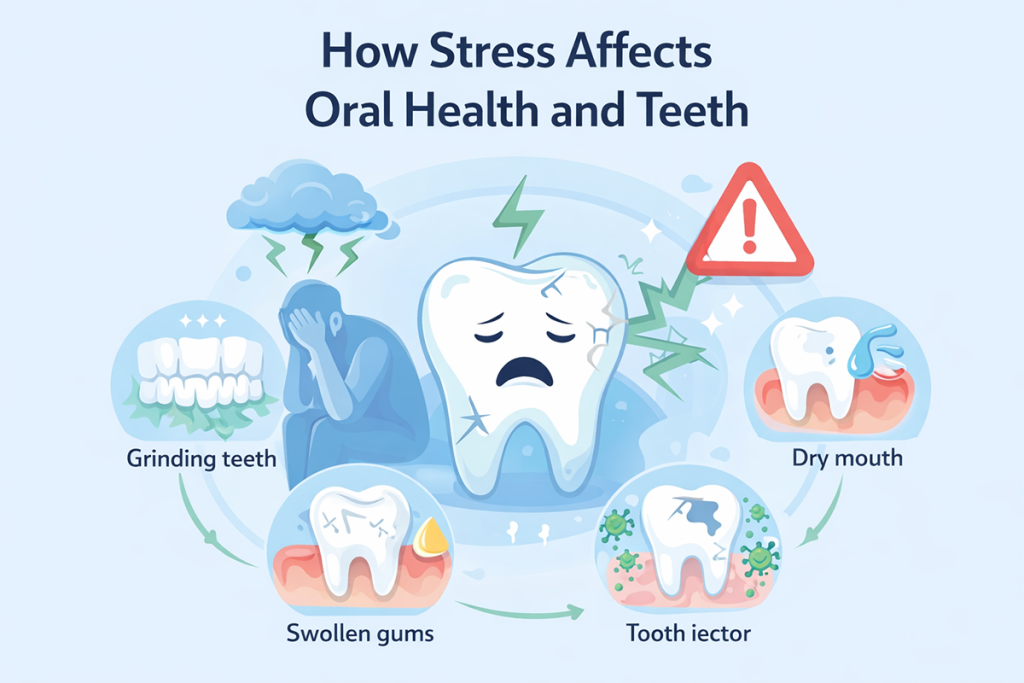
One of the most common ways stress affects oral health is through teeth grinding, also known as bruxism. Many people grind or clench their teeth unconsciously, especially during sleep.
This constant pressure wears down enamel, causes jaw pain, and may lead to cracked or fractured teeth. Over time, grinding can also strain jaw joints and surrounding muscles.
Gum disease linked to stress
Stress weakens the immune system, making it harder for the body to fight infections. As a result, gums become more vulnerable to inflammation and infection.
People under chronic stress may experience swollen, bleeding gums or worsening gum disease. Reduced immunity allows bacteria to thrive, increasing the risk of gingivitis and periodontitis.
Dry mouth caused by stress
Stress often reduces saliva flow, leading to dry mouth. Saliva plays a vital role in washing away bacteria, neutralizing acids, and protecting enamel.
A dry mouth environment encourages plaque buildup and increases the likelihood of cavities, bad breath, and gum irritation. Certain stress-related medications can further worsen dryness.
Increased risk of cavities
Stress can influence dietary habits, causing people to consume more sugary or acidic foods. Combined with reduced saliva and weakened enamel, this creates an ideal environment for tooth decay.
Irregular oral hygiene routines during stressful periods also contribute to cavity formation.
Delayed healing and oral infections
Stress slows the body’s natural healing processes. Minor gum injuries, mouth sores, or dental procedures may take longer to heal under stress.
This delay increases the chance of infections and prolongs discomfort, especially after dental treatments or extractions.
Jaw pain and facial tension
Muscle tension caused by stress often affects the jaw and facial muscles. This tension may lead to headaches, jaw stiffness, and discomfort while chewing.
Over time, chronic tension can contribute to temporomandibular joint (TMJ) issues, further impacting oral comfort.
Neglect of oral hygiene during stress
When stress becomes overwhelming, daily routines are often disrupted. Skipping brushing, flossing, or dental visits becomes more common.
Neglected oral care allows plaque and bacteria to accumulate, increasing the risk of cavities, gum disease, and bad breath.
Managing stress for better oral health
Managing stress is essential for protecting oral health. Simple strategies such as regular exercise, mindfulness, proper sleep, and hydration help reduce stress-related effects on the body and mouth.
Maintaining consistent oral hygiene and seeking professional guidance during stressful periods helps prevent long-term damage. Dental professionals at clinics like Lakewood Dental Smile often emphasize the connection between lifestyle factors and oral health when guiding patients toward preventive care.
Why awareness matters
Recognizing how stress affects oral health empowers individuals to take early action. Stress-related dental issues often develop gradually, making awareness a key factor in prevention.
Addressing stress alongside oral care routines creates a stronger foundation for long-term dental health.
Research continues to show that how stress affects oral health goes beyond temporary discomfort. Chronic stress can weaken the body’s natural defenses, making teeth and gums more vulnerable to infection and inflammation. By understanding how stress affects oral health, individuals can make informed lifestyle changes that support both mental well-being and long-term dental stability.
Stress does more than affect the mind—it impacts the mouth as well. Understanding how stress affects oral health helps individuals protect their teeth, gums, and overall well-being. By managing stress and maintaining consistent dental habits, it is possible to reduce damage and preserve a healthy, confident smile.