
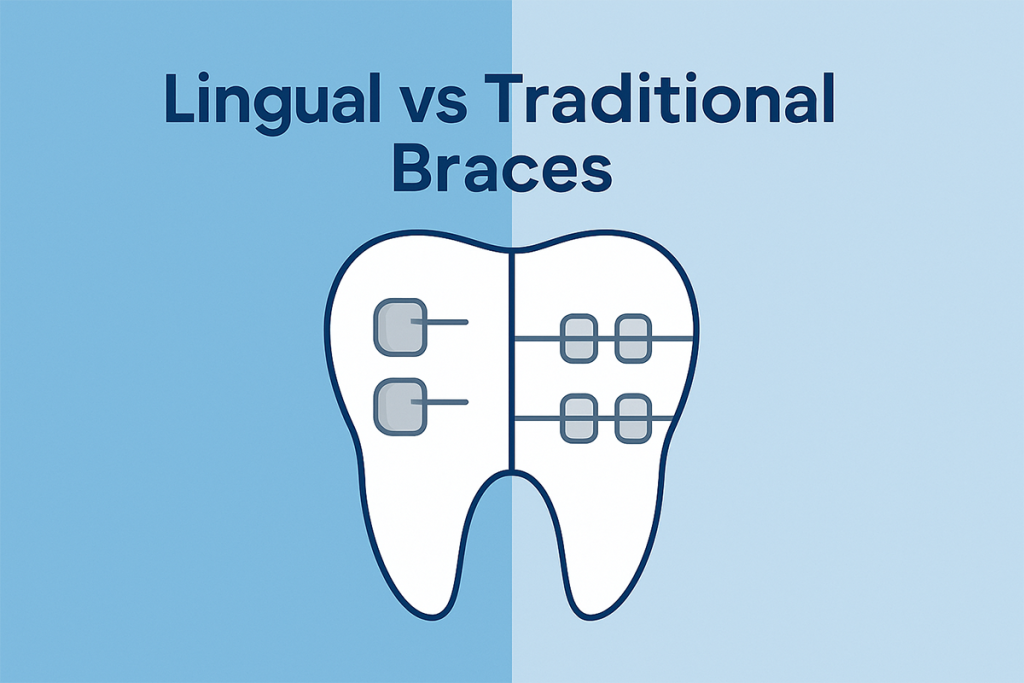
Choosing between lingual vs traditional braces can feel overwhelming, especially when you want straighter teeth, a balanced bite, and improved confidence. Both orthodontic systems are designed to correct crowding, fix alignment issues, and support long-term oral health, but understanding the distinctions between them allows you to choose the treatment that aligns with your lifestyle and expectations. When comparing lingual vs traditional braces, it helps to look at the advantages, comfort factors, and visibility differences that influence most patients’ decisions.
What Exactly Are Lingual Braces?
Lingual braces are placed behind your teeth rather than on the front surface. Because of this hidden placement, they are one of the most discreet orthodontic options available today. Each lingual bracket is custom-made using impressions of your teeth, and the fabrication process can take several weeks. Once completed, your orthodontist uses a specialized bonding technique to fix the brackets on the inner side of your teeth. Although this system requires greater skill and customization, it delivers predictable results while remaining virtually invisible throughout treatment.
How Do Lingual and Traditional Braces Compare Mechanically?
Structurally, both types use metal brackets and wires to apply controlled pressure that gradually shifts your teeth into alignment. The main difference is the direction from which the pressure is applied. Lingual braces move teeth from behind, while traditional braces shift them from the front. Despite this distinction, both are highly effective at correcting crowding, spacing, bite issues, and misalignment. Treatment times are often similar, although lingual braces may require slightly more frequent adjustments due to their placement.
5 Key Pros to Help You Decide
When comparing lingual vs traditional braces, these five important points often guide most treatment choices:
Are they related?
Both the braces are similar in the make. It is the combination of metal brackets and wires. The difference lies in the way it works, where the lingual braces slowly reposition the teeth from behind and the traditional braces do the same from the front of teeth.
1. Appearance and Confidence
Lingual braces are nearly invisible, making them ideal for adults and teens who prefer subtle treatment. Traditional braces remain more noticeable due to their front placement, although modern designs are smaller and more refined than older versions.
2. Comfort Differences
If you’re ready to get started with braces and straightening your smile, then request a consultation with an orthodontist at Lakewood Dental Smile in Dearborn, Michigan.
3. Budget Considerations
Traditional braces are typically more affordable and widely available. Lingual braces involve advanced customization and additional orthodontist training, which contributes to their higher cost. Your orthodontist will help determine which system matches your budget and expectations.
4. Treatment Complexity
Lingual braces are ideal for those who need discreet correction, especially when cosmetic concerns are a top priority. Traditional braces are reliable for nearly all orthodontic cases, including complex movements, and are often the most efficient when major adjustments are needed.
5. Oral Hygiene and Maintenance
Brushing and flossing require extra attention with both systems. Lingual braces may be slightly harder to clean because they sit behind the teeth, while traditional braces require careful brushing around front brackets. Using tools like floss threaders, interdental brushes, and water flossers supports better hygiene during treatment.
Which Option Truly Fits Your Needs?
Choosing between lingual vs traditional braces depends on your appearance goals, comfort preferences, budget, and the complexity of your orthodontic case. Lingual braces offer unmatched privacy, while traditional braces provide cost-effective and widely accessible results. Both methods can deliver a healthier bite and straighter smile when managed under the guidance of an experienced orthodontist. A thoughtful conversation with your dental provider will help clarify expectations and determine the right pathway.
During your evaluation process, it’s helpful to understand how various treatment options support long-term oral health. This type of guidance is often emphasized in patient-focused clinics such as Lakewood Dental Smile, where orthodontic decisions are shaped around personalized care and balanced treatment planning.