A brighter smile is something many people want, but confusion around whitening treatments often leads to wrong choices. From home remedies shared online to over-the-counter products promising instant results, it is difficult to separate truth from exaggeration. Understanding accurate teeth whitening facts helps people make safer decisions and avoid damage that may not be visible immediately.
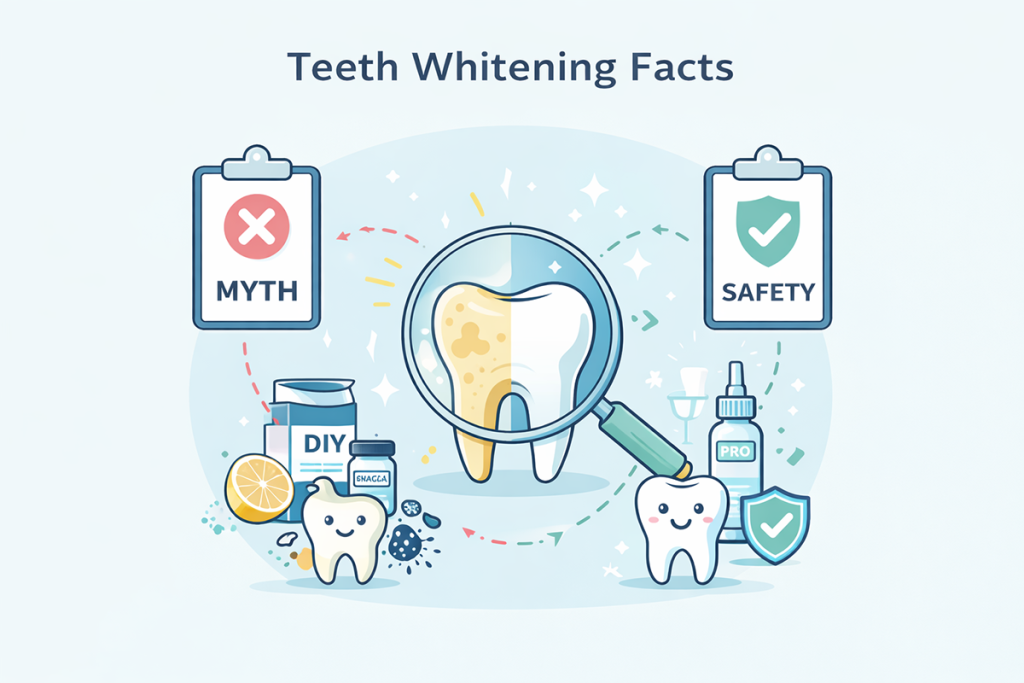
One important fact is that teeth whitening does not work the same way for everyone. Tooth color is influenced by genetics, age, enamel thickness, and lifestyle habits such as coffee or tobacco use. Some stains sit on the surface of the teeth, while others are deeper inside the tooth structure. This is why whitening results vary, even when people use the same method.
Professional whitening treatments are often considered the most reliable option, and there is a reason for that. These treatments use controlled concentrations of whitening agents under professional supervision. This allows stains to be lifted effectively while minimizing the risk of gum irritation or enamel damage. One key point among teeth whitening facts is that professional methods are designed to balance results with safety, not speed alone.
Home whitening kits and strips can work for mild surface stains, but expectations need to be realistic. Many people assume these products will give dramatic results in a short time, which is rarely true. Overuse or improper use can lead to tooth sensitivity and gum discomfort. Whitening products are not meant for daily or continuous use, and ignoring instructions is a common cause of problems.
A major myth that needs to be addressed involves natural or DIY whitening remedies. Ingredients like lemon juice, baking soda, or charcoal are often promoted as safe alternatives. In reality, these substances can be abrasive or acidic, which gradually wears down enamel. Once enamel is damaged, it does not grow back. One of the most important teeth whitening facts is that enamel damage can make teeth appear darker over time, not whiter.
Sensitivity after whitening is another concern people often worry about. Mild sensitivity can occur temporarily, especially when whitening agents penetrate the enamel to break down stains. This usually resolves on its own. However, severe or long-lasting sensitivity is a sign that whitening is being done incorrectly or too frequently. This is why understanding teeth whitening facts before starting any treatment is essential.
Another often-overlooked fact is that whitening does not work on all dental work. Crowns, veneers, and fillings do not change color with whitening agents. This can lead to uneven tooth color if whitening is done without proper planning. A dentist can assess existing restorations and explain what results are realistically achievable before treatment begins.
Long-term oral health should always be the priority. Whitening should never replace good daily habits such as brushing, flossing, and regular dental checkups. Surface stains can return if underlying habits remain unchanged. Limiting staining foods and drinks, maintaining oral hygiene, and following professional advice help maintain results safely.
People with certain dental conditions should be especially cautious. Untreated cavities, gum disease, or weakened enamel can worsen with whitening treatments. One of the most practical teeth whitening facts is that whitening should be postponed until underlying dental issues are treated. This prevents discomfort and protects the teeth from further damage.
When done responsibly, whitening can be a safe and effective way to enhance a smile. The key is understanding what works, what does not, and what carries risks. Accurate teeth whitening facts allow people to avoid shortcuts that cause long-term harm and choose methods that support both appearance and oral health.
Toward the end of any whitening journey, professional guidance plays an important role in maintaining results safely. At Lakewood Dental Smile, discussions around whitening are approached with a focus on patient education and long-term enamel protection, helping individuals make informed decisions rather than relying on trends or myths.