Tooth sensitivity causes discomfort that many people experience daily, often without understanding why it happens. A sharp, sudden pain when drinking something hot, cold, sweet, or acidic is a common sign of sensitive teeth. While this condition is widespread, it should never be ignored, as sensitivity often points to underlying dental issues that require attention.
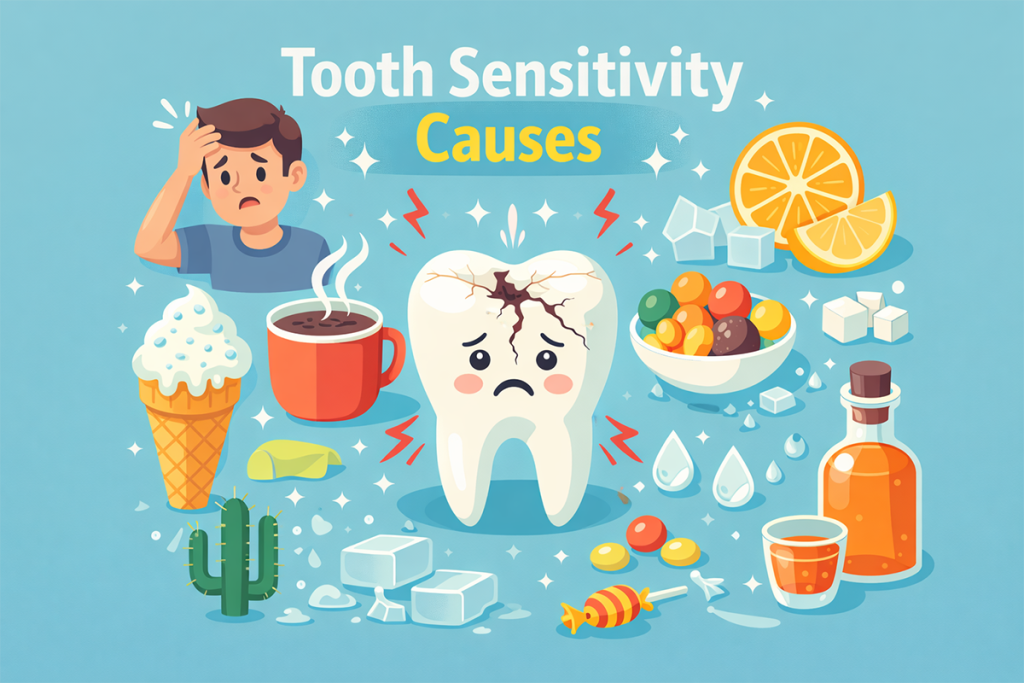
Tooth sensitivity occurs when the protective enamel layer wears down or when gums recede, exposing the softer dentin beneath. Dentin contains tiny tubules that connect to the tooth’s nerve, allowing external stimuli to trigger pain. Identifying the exact tooth sensitivity causes helps prevent long-term damage and improves overall oral comfort.
Worn tooth enamel
One of the most common tooth sensitivity causes is enamel erosion. Enamel can wear down due to acidic foods, carbonated drinks, or aggressive brushing habits.
Once enamel becomes thin, the inner layers of the tooth are left vulnerable, making teeth more reactive to temperature changes.
Gum recession
When gums recede, the tooth roots become exposed. Unlike enamel, roots are not protected by a hard outer layer, making them extremely sensitive.
Gum recession may result from poor oral hygiene, gum disease, or excessive brushing pressure.
Tooth decay
Cavities create openings in the tooth structure that allow stimuli to reach the nerves more easily. Tooth decay is a serious condition that often presents sensitivity as an early warning sign.
Prompt treatment can prevent the cavity from worsening and reduce discomfort.
Cracked or chipped teeth
Small cracks or chips in teeth may not always be visible, but they can expose dentin and cause sensitivity. These cracks allow bacteria and food particles to irritate the nerve endings.
Small cracks or chips in teeth may not always be visible, but they can expose dentin and cause sensitivity. These cracks allow bacteria and food particles to irritate the nerve endings.
Ignoring cracked teeth can lead to more severe dental problems over time.
Teeth grinding (bruxism)
Grinding or clenching teeth places excessive pressure on enamel, leading to gradual wear. Many people grind their teeth unknowingly during sleep.
This habit is a lesser-known but significant contributor to tooth sensitivity causes.
Recent dental treatments
Temporary sensitivity may occur after dental procedures such as fillings, crowns, or whitening treatments. This type of sensitivity usually resolves on its own within a few days or weeks.
Persistent pain after treatment should always be evaluated by a dental professional.
Improper brushing techniques
Using a hard-bristled toothbrush or brushing too forcefully can damage both enamel and gum tissue. Over time, this leads to exposed dentin and increased sensitivity.
Gentle brushing with a soft-bristled toothbrush is recommended to protect tooth surfaces.
Acidic foods and beverages
Frequent consumption of acidic foods weakens enamel and increases sensitivity. Citrus fruits, sodas, and vinegar-based foods are common culprits.
Rinsing the mouth with water after acidic meals helps reduce acid exposure.
How to manage and prevent sensitivity
Understanding tooth sensitivity causes is the first step toward relief. Using desensitizing toothpaste, practicing gentle brushing, and maintaining regular dental checkups can significantly reduce symptoms.
Dental professionals can also recommend protective treatments such as fluoride applications or bonding procedures. Clinics like Lakewood Dental Smile emphasize identifying the root cause of sensitivity rather than just treating the symptoms.
Tooth sensitivity can also be influenced by lifestyle and environmental factors that are often overlooked. Changes in daily routines, stress levels, and diet patterns may gradually worsen sensitivity without causing immediate pain. For example, frequent consumption of extremely hot or cold foods, dehydration, and reduced saliva flow can all increase nerve exposure over time. Saliva plays a critical role in neutralizing acids and protecting enamel, so reduced saliva production can make teeth more vulnerable. Additionally, people who regularly switch between acidic and sugary foods throughout the day may unknowingly extend acid attacks on enamel. Addressing these contributing factors alongside proper oral hygiene helps reduce discomfort and prevents sensitivity from becoming a long-term issue.
Tooth sensitivity is common, but it should not be considered normal or unavoidable. By recognizing the underlying tooth sensitivity causes and adopting proper oral care habits, individuals can reduce pain, protect their teeth, and enjoy daily activities without discomfort. Early attention and preventive care play a key role in maintaining long-term oral health.