Many people experience sharp or sudden pain in their teeth when drinking hot tea, cold water, or eating sweet foods. This discomfort is often brushed off as a minor issue, but sensitive teeth are usually a signal that something deeper is happening. Understanding the real tooth sensitivity causes helps identify whether the problem is temporary or a sign of an underlying dental condition that needs attention.
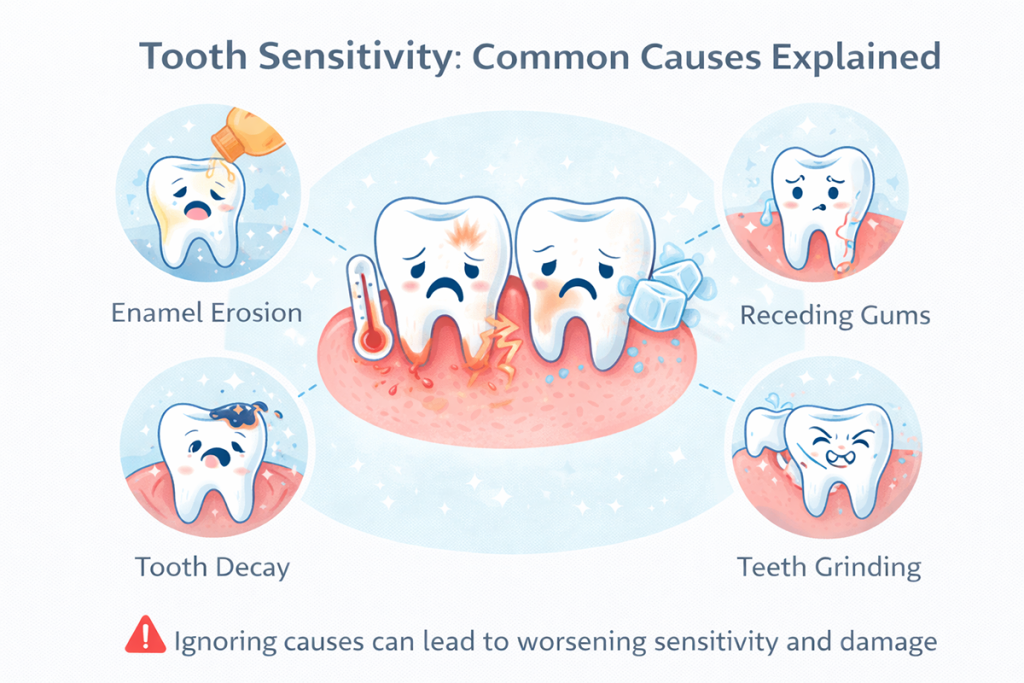
One of the most common reasons for sensitivity is enamel wear. Enamel is the hard outer layer that protects teeth from temperature changes and bacteria. Over time, aggressive brushing, using hard-bristled toothbrushes, or abrasive toothpaste can wear down enamel. When this protective layer thins, the sensitive inner layer of the tooth becomes exposed. This exposure allows hot, cold, or sweet substances to reach the nerves more easily, triggering pain. Enamel wear is one of the most frequent tooth sensitivity causes and often develops slowly without obvious warning signs.
Gum recession is another major contributor to tooth sensitivity. When gums pull away from the teeth, the roots become exposed. Unlike enamel, tooth roots do not have a protective outer layer, making them highly sensitive to temperature changes. Gum recession can occur due to gum disease, improper brushing techniques, or natural aging. Because it progresses gradually, many people do not notice it until sensitivity becomes persistent. Among all tooth sensitivity causes, gum recession is one that often worsens if left untreated.
Tooth decay can also lead to sensitivity. Cavities allow bacteria to break through enamel and reach the inner layers of the tooth. Even small cavities can cause sensitivity before pain becomes constant. At this stage, discomfort may only appear when eating or drinking certain foods. Recognizing decay early as one of the tooth sensitivity causes helps prevent the need for more complex treatments later.
Cracked or chipped teeth are another source of sensitivity that is frequently overlooked. Cracks may not always be visible, but they can expose sensitive areas inside the tooth. When pressure is applied while chewing or when temperature changes occur, pain is triggered. These cracks can worsen over time, allowing bacteria to enter and cause infection. Addressing cracks early reduces the risk of further damage and ongoing sensitivity.
Recent dental procedures can also temporarily increase sensitivity. Treatments such as teeth whitening, fillings, or deep cleanings may irritate the nerves inside the teeth for a short period. This type of sensitivity usually subsides within days or weeks. However, prolonged discomfort after treatment may indicate an underlying issue. Understanding temporary versus persistent tooth sensitivity causes helps determine when professional evaluation is needed.
Grinding or clenching teeth, often caused by stress or sleep habits, can contribute significantly to sensitivity. This constant pressure wears down enamel and places strain on tooth structures. Over time, grinding exposes sensitive layers and increases the risk of cracks. Many people are unaware they grind their teeth until sensitivity or jaw pain develops. This makes grinding one of the less obvious but common tooth sensitivity causes.
Another important factor is acidic food and drink consumption. Frequent intake of citrus fruits, carbonated drinks, or acidic beverages gradually erodes enamel. When enamel weakens, teeth become more sensitive to temperature and sweetness. Reducing acid exposure and maintaining good oral hygiene can help protect enamel and reduce sensitivity over time.
In some cases, sensitivity may be an early warning sign of more serious dental issues. Persistent discomfort, especially when combined with gum swelling or pain, may indicate infection inside the tooth. Identifying tooth sensitivity causes early helps prevent progression to conditions that require more invasive treatment.
The good news is that sensitive teeth are often manageable when addressed promptly. Proper brushing techniques, suitable toothpaste, and professional guidance can reduce discomfort and protect tooth structure. Ignoring sensitivity, however, allows underlying problems to worsen, increasing the risk of pain and tooth damage.
Toward the end of sensitivity evaluation, professional assessment plays an important role in identifying the exact cause and recommending appropriate care. At Lakewood Dental Smile, sensitivity is approached as a signal to understand tooth health early and prevent long-term complications through timely, informed care.